
Conditions · Coral Springs & Parkland
Degenerative disc disease treatment in Coral Springs
Worn, thinning discs are part of aging — the pain and stiffness do not have to be. We identify which segments are driving your symptoms, take the pressure off them, and build the support that lets the rest of your spine carry the load.
Quick answer
Degenerative disc disease treatment cannot reverse disc aging, but it can relieve the pain it causes. As discs lose water and height, nearby joints and nerves take the strain. We ease that pressure with non-surgical spinal decompression and specific adjustments, then strengthen the core and improve alignment so healthier segments share the load — all inside the 4R Method, without drugs or surgery.
What is degenerative disc disease, and why does it hurt?
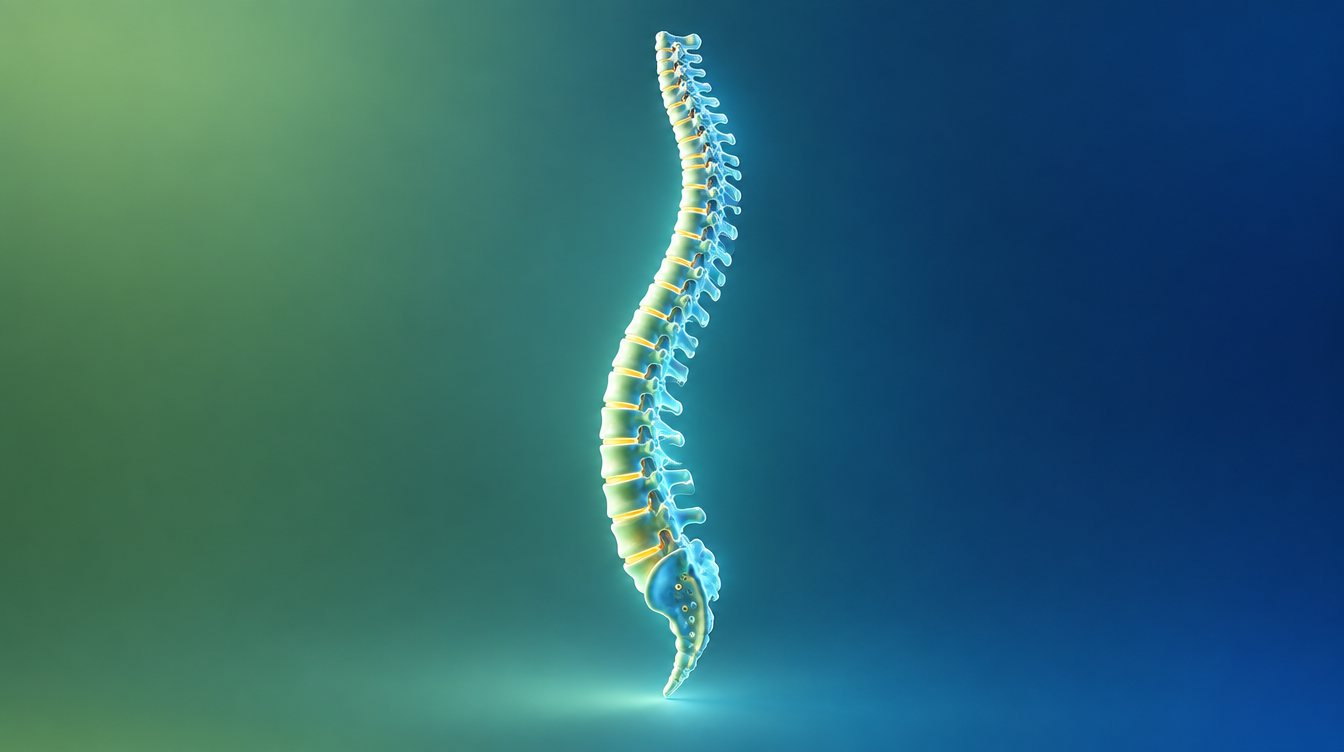
Degenerative disc disease treatment starts with an honest definition. Despite the name, it is not really a disease — it is the natural wear of the spinal discs over time. The discs between your vertebrae are about 80% water when you are young. As the decades pass they dry out, lose height and cushion the spine less effectively.
A thinner disc changes everything around it. The facet joints behind the disc are pushed closer together and begin to grind and inflame. The openings where nerves exit narrow, so a root can be pinched by a bulge or bone spur that would once have had room. The muscles beside the spine guard the segment and tire. The result is the deep, nagging pain, stiffness and intermittent nerve irritation that often comes and goes for years.
Too many people in Coral Springs are told it is ‘part of aging’ and handed a prescription. Our degenerative disc disease treatment takes a different path: we identify the segments actually generating your symptoms, relieve the pressure on them, and support the rest of the spine so it can do more of the work.
How do you know disc degeneration is the source of your pain?
Most adults over 40 have some disc degeneration on an X-ray or MRI, and many have no pain at all. What matters is whether the worn segment matches your symptoms. The pattern we look for:
- Chronic, low-grade ache in the low back or neck that flares for days or weeks, then settles, then returns — often over years.
- Worse with sustained positions — sitting, standing in one place, bending — and better with changing position or lying down.
- Morning stiffness that eases after moving around, because the disc rehydrates slightly overnight and the joints stiffen.
- Intermittent nerve symptoms — tingling or aching into the buttock, leg or arm when a narrowed opening pinches a root; see pinched nerve treatment.
- A feeling of instability — the back ‘gives’ or catches, because a flattened disc lets the segment move more than it should.
Degeneration rarely travels alone. It is the soil in which spinal stenosis, facet arthritis and herniated discs grow, which is why your exam looks at the whole segment rather than the disc alone. The Cleveland Clinic notes that disc degeneration is extremely common and that most people manage symptoms well with non-surgical care (Cleveland Clinic, Degenerative Disk Disease).
Good to know
The amount of degeneration on an image does not predict how much pain you have. Two people with identical X-rays can have very different lives — and the difference is usually alignment, stability and muscle support, all of which can change.
How we approach degenerative disc disease treatment with the 4R Method
Because degeneration is a long-term condition, our degenerative disc disease treatment is built on the 4R Method — Repair, Rebuild, Regenerate, Refine — with extra weight on the phases that protect the spine over years.
R1 · Repair — unload the worn segment
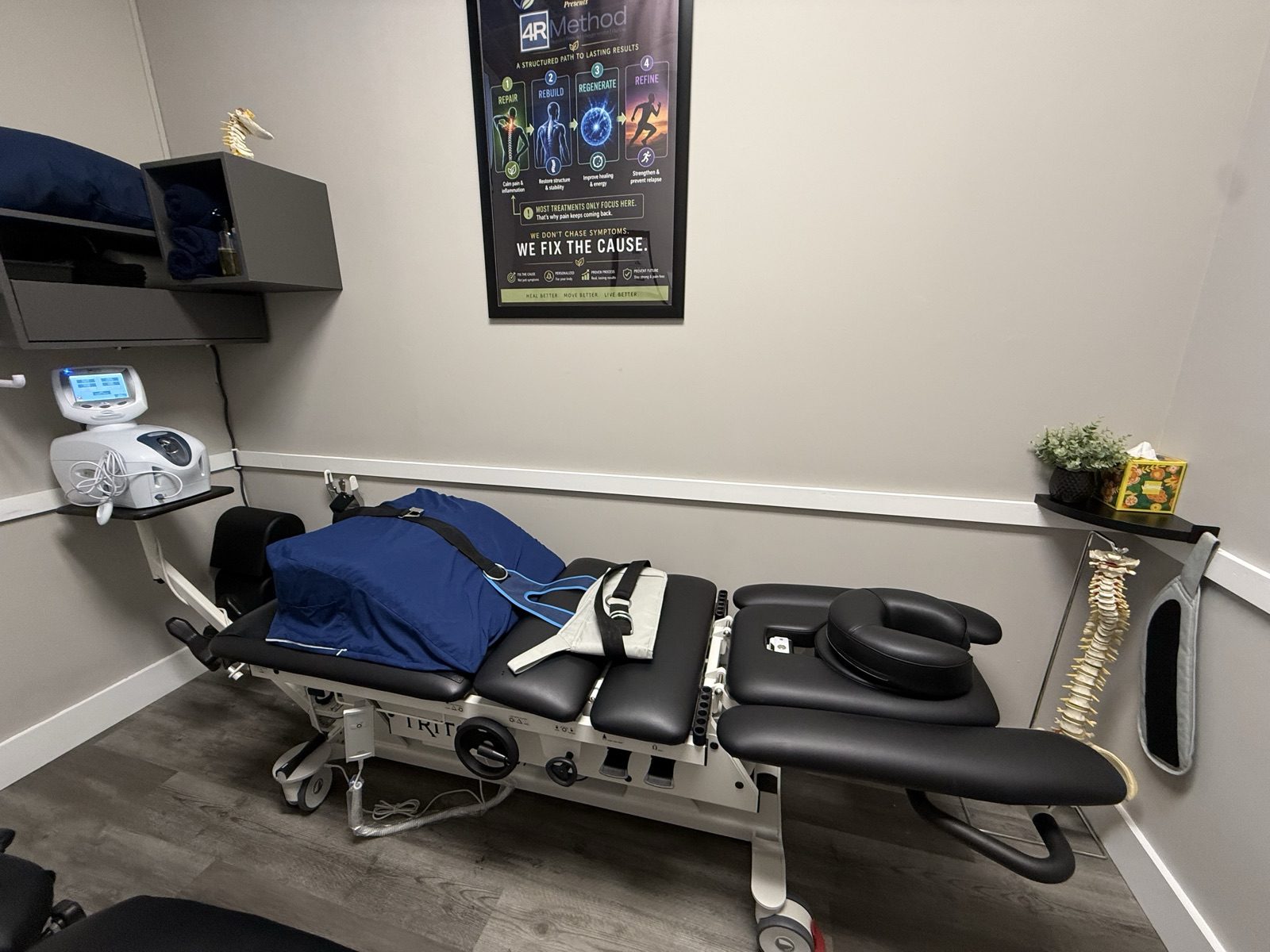
Non-surgical spinal decompression on the Triton DTS table gently separates the vertebrae, lowering pressure on the thinned disc and the nerves beside it and drawing fluid back into the disc. We pair it with gentle, specific adjustments to restore motion to the stiff facet joints and cold laser for inflammation. Typically 3–5 visits a week for 4–8 weeks; most patients feel the deep ache easing within the first few weeks.
R2 · Rebuild — make healthier segments share the load
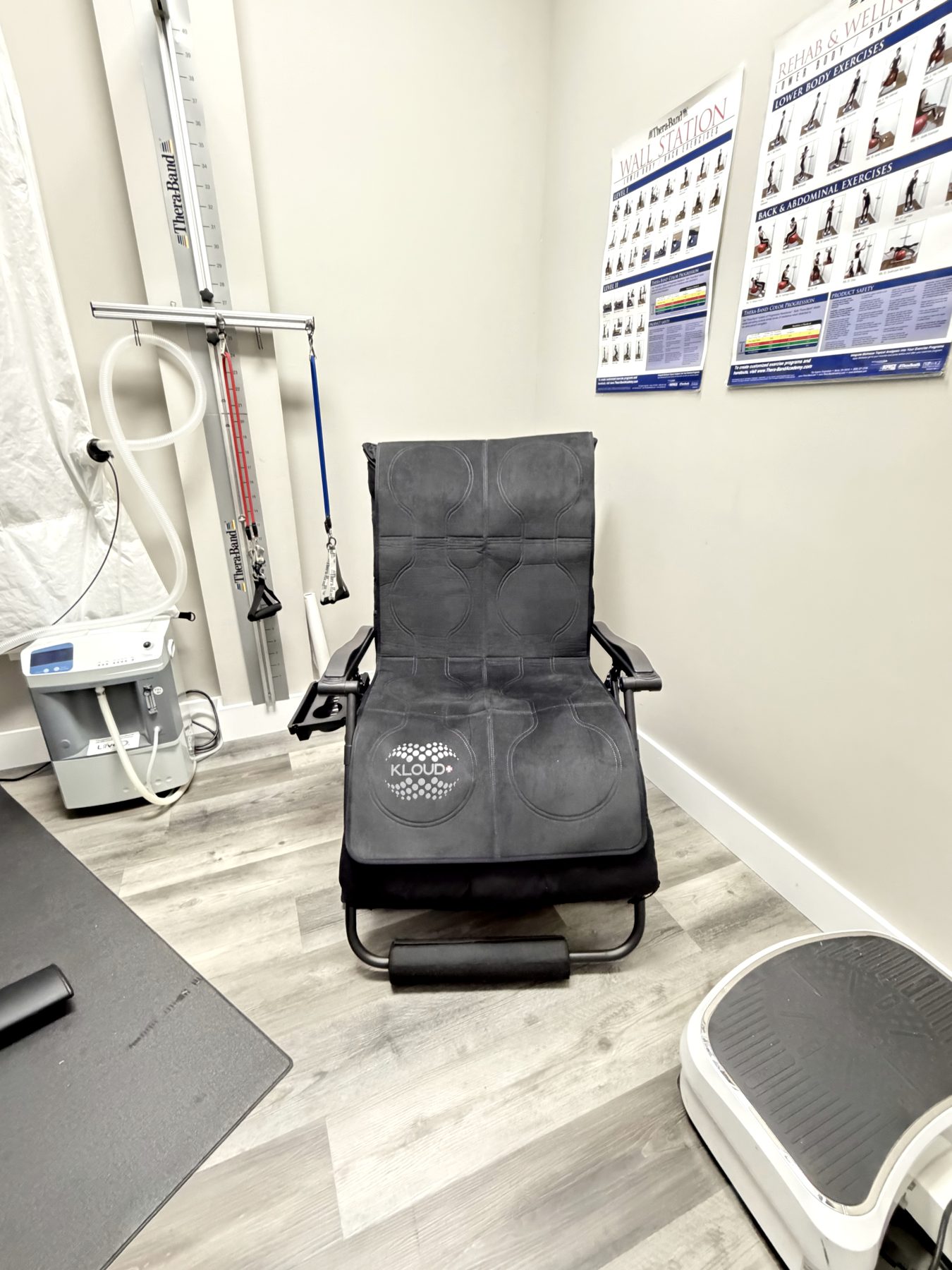
Corrective care to improve curve and alignment, physical therapy to strengthen the deep core and back muscles that stabilize a flattened segment, and Graston for the chronically guarded tissue. Usually 2–3 visits a week for 8–16 weeks. For a degenerative spine, this phase is the difference between managing flare-ups and preventing them.
R3 and R4 · Regenerate and Refine
Worn discs have a poor blood supply, so the Regenerate phase supports tissue health with PEMF, red light and recovery protocols at about 2 visits a week. Refine — a brief structural tune-up every month or two — matters more for degeneration than for almost any other condition, because the wear does not stop.
Non-surgical spinal decompression
Lowers pressure on thinned discs and the nerves beside them, and draws fluid back into the disc.
Learn moreChiropractic adjustments
Restore motion to stiff, arthritic facet joints so they stop grinding and guarding.
Learn morePEMF therapy
Pulsed electromagnetic fields support circulation and tissue repair in slow-healing discs.
Learn morePhysical therapy
Build the stabilizers that protect a worn segment when you sit, lift, walk and play.
Learn moreWhat to expect at your first two visits
With degeneration, the question is never ‘is there wear’ but ‘which worn segment is causing this’. So we measure first.
Visit one — we measure (and usually begin care)
- A real conversation. How long the pain has cycled, what positions aggravate it, any nerve symptoms, and what you want to keep doing — golf, grandchildren, the garden.
- A hands-on structural exam. Segment-by-segment motion, orthopedic tests that load the disc and the facet joints separately, nerve-tension tests, and neurological screening.
- Surface EMG and thermal scanning. A painless scan showing which levels the muscles are guarding and where nerve irritation is present — the objective baseline we re-scan to track progress.
- Digital X-rays when indicated. Disc height, spur formation, alignment and stability; we review any MRI you already have.
Visit two — your findings and your plan
We show you the segments involved, explain honestly what conservative care can and cannot do for your spine, and map the four phases of the 4R Method to a realistic timeline. Your full plan starts here — and in most cases care already began on visit one. The 60-second spine assessment gives us a head start.
Living well with degenerative discs: daily habits that protect your spine
- Move every 30–45 minutes. Discs are nourished by motion; sustained sitting starves them and raises pressure.
- Walk daily. Rhythmic loading pumps fluid through the disc and keeps the facet joints lubricated.
- Hinge, don’t bend. Keep loads close and move at the hips. A worn disc tolerates compression better than it tolerates bending under load.
- Strengthen, gently and consistently. Core and hip work prescribed in your Rebuild phase is the single most protective habit for a degenerative spine.
- Stay hydrated and do not smoke. Dehydration and smoking both accelerate disc breakdown.
- Manage weight. Every extra pound adds load to the lumbar discs with each step.
Heat is usually more helpful than ice for the stiffness of degeneration; ice is for an acute flare. And a flare does not mean you have ‘damaged’ the disc — it usually means a joint or muscle has reacted, and it settles faster with the right care.
When degenerative disc pain needs a doctor instead
Please see a doctor or urgent care today if you have loss of bladder or bowel control, numbness in the groin, rapidly worsening leg or arm weakness, back pain with fever, unexplained weight loss or a history of cancer, or pain after a fall or accident. Those signs need medical evaluation before conservative care.
For the everyday reality of degenerative disc disease — the ache, the stiffness, the flare-ups that keep you off the golf course — non-surgical degenerative disc disease treatment is what we do all day in Coral Springs and Parkland. If your symptoms are mainly in the low back, start with our lower back pain guide; if walking makes your legs heavy, read about spinal stenosis.
Serving degenerative disc patients across North Broward
Our clinic at 5675 Coral Ridge Drive, Coral Springs, FL 33076 serves Coral Springs, Parkland, Coconut Creek, Margate, Boca Raton, Tamarac, Pompano Beach and Deerfield Beach. Same-day appointments are usually available — call (954) 341-2256 or book online. Most patients from Parkland and Coral Springs are here in under 15 minutes.
Medically reviewed by Dr. Jared Cohen, DC — Co-Founder & Clinical Director, The Spine and Wellness Center. Last reviewed October 2026.
Frequently asked questions
What is degenerative disc disease?
Degenerative disc disease is the natural wear of the spinal discs over time, not a disease in the usual sense. As discs lose water and height, they cushion the spine less effectively, which can cause chronic pain, stiffness and nerve irritation in the neck or lower back.
Can chiropractic care help degenerative disc disease?
It cannot reverse disc aging, but it can relieve the pain it causes. Decompression lowers pressure on worn discs and nerves, adjustments restore motion to stiff facet joints, and rehab builds the support that lets healthier segments share the load. Most patients notice meaningful relief within the first few weeks.
Is degenerative disc disease treatment painful?
No. Decompression on the Triton DTS table is a slow, controlled stretch most patients find relaxing, adjustments are matched to your comfort and the sensitivity of your spine, and cold laser and PEMF are painless. We adjust the plan to keep every visit comfortable.
Does degenerative disc disease always get worse?
The wear itself progresses slowly with age, but symptoms do not have to. Alignment, stability and muscle support determine how much a worn disc hurts far more than how worn it looks, and all three can improve with care and daily habits.
How often should I come in for degenerative disc disease?
A Repair phase typically runs 3–5 visits a week for 4–8 weeks, then Rebuild at 2–3 visits a week for 8–16 weeks. After that, most degenerative disc patients do best with a brief tune-up every month or two, because the underlying wear does not stop.
Do you treat degenerative disc patients from Parkland and Deerfield Beach?
Yes. Our clinic on Coral Ridge Drive in Coral Springs is minutes from Parkland, Coconut Creek, Margate, Deerfield Beach and Boca Raton, and same-day appointments are usually available.
Keep reading
From the blog
Same-day appointments
Let's build your plan.
Find out what's actually going on and get a clear path forward. Same-day appointments available.
- Same-day appointments are usually available
- Our team calls you back to confirm your visit
- Coral Springs, serving Parkland & North Broward since 2005
Prefer to talk now? Call or text (954) 341-2256