
Treatment · Coral Springs & Parkland
Spinal Decompression in Parkland, FL
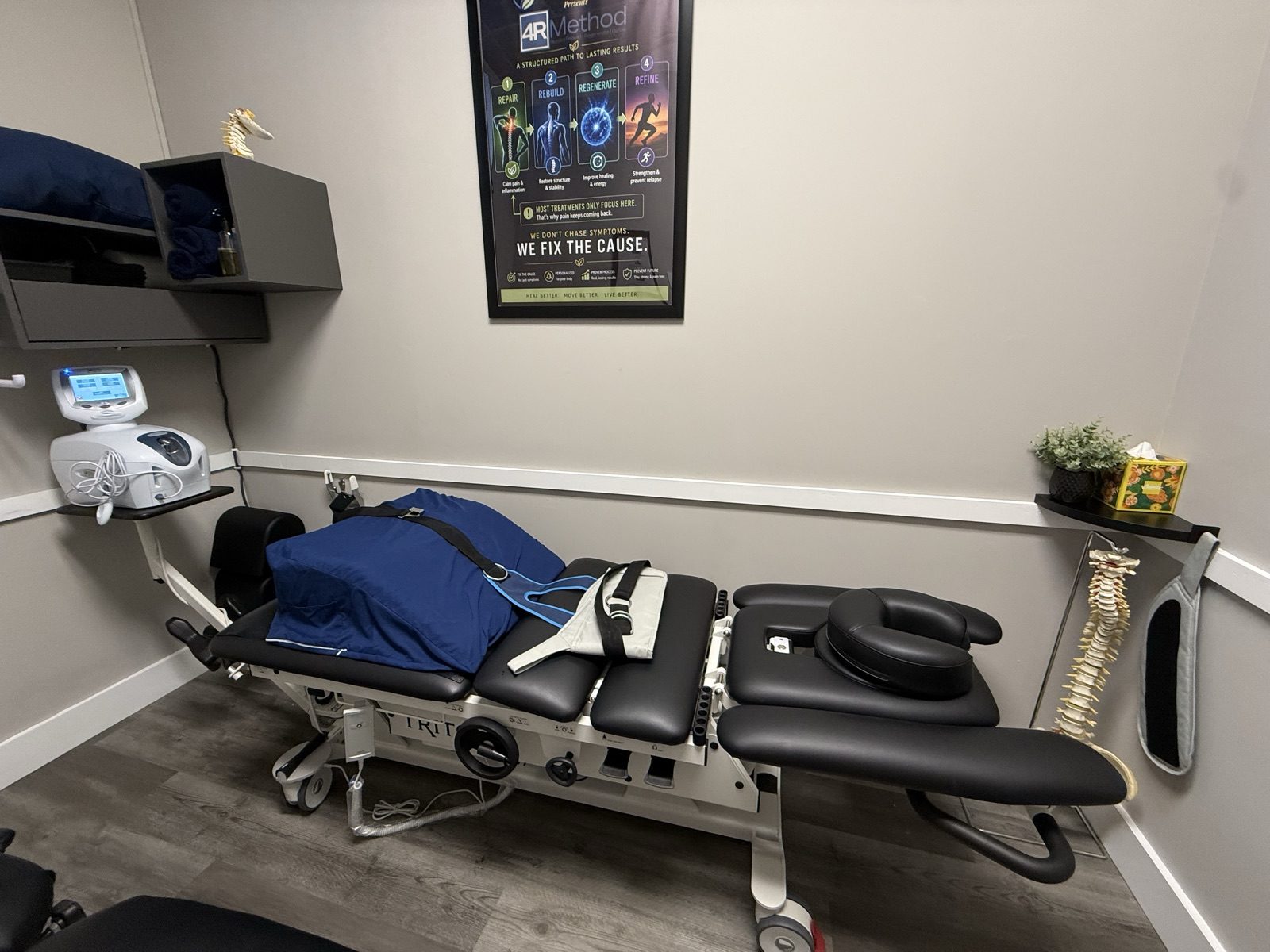
Non-surgical spinal decompression on the Triton DTS table at The Spine and Wellness Center, Coral Springs — about 5 to 10 minutes from Parkland straight down Coral Ridge Drive or University Drive. Same-day appointments are usually available.
Quick answer
Parkland residents get non-surgical spinal decompression at The Spine and Wellness Center, 5675 Coral Ridge Drive in Coral Springs, about 5 to 10 minutes away. Visit one measures the spine — exam, surface EMG and thermal scanning, X-rays when indicated. Visit two is your full findings and plan, and computer-controlled Triton DTS decompression starts there for disc, sciatica and pinched-nerve patterns.
Why Parkland patients choose us for spinal decompression
Plenty of Parkland residents could find a chiropractor closer to home. They make the drive to us for spinal decompression in Parkland for three practical reasons.
- It is a straightforward drive. Our clinic at 5675 Coral Ridge Drive is about 5 to 10 minutes from Parkland straight down Coral Ridge Drive or University Drive, with free parking at the door. Patients from Heron Bay, Parkland Golf & Country Club and Pine Trails Park are here every week.
- Hours that fit a working week. We are open until 7:00 pm on Monday, Tuesday and Thursday, with Wednesday afternoon and Friday morning hours, so you can come after work or before the commute without using a vacation day.
- We already know Parkland. We typically see Parkland families and youth athletes from Pine Trails Park, golfers from Heron Bay and Parkland Golf & Country Club, and parents juggling long days behind a desk and the carpool line. Your plan is built around how you actually spend your days, not a generic template.
What is spinal decompression and how does the Triton DTS table work?
If you are weighing spinal decompression in Parkland against an injection or a surgical consult, start with what the treatment actually does. On the Triton DTS table at our Coral Springs clinic, a computer applies a precisely controlled pull along the spine, holds it, then releases — in repeating cycles targeted to the disc that is causing trouble. The aim is to reduce the pressure inside that disc so a bulge can move away from the nerve.
That matters because disc pain is really nerve pain. A herniated or bulging disc at L4–L5 or L5–S1 presses on the root that runs down the leg; in the neck, a C5–C7 disc presses on the root that runs into the shoulder and arm. Pills quiet the signal for a few hours. Decompression works on the cause of the signal.
Patients from Heron Bay and Parkland Golf & Country Club often tell us they expected a clinic version of hanging from a bar. It is nothing like that. The table does the work, the computer keeps the force smooth, and most people describe the sessions as relaxing. For the engineering details and the research behind it, read our main spinal decompression therapy guide.

Who is spinal decompression in Parkland for — and is it the same as traction?
Not every back needs a decompression table, and we say so on visit one. The exam sorts Parkland patients into two groups: those whose pain is coming from a disc or a compressed nerve, and those whose pain is joint, muscle or sacroiliac — which responds better to adjustments, rehab and soft-tissue work. Decompression is for the first group.
- Disc herniation or bulge with pain that worsens sitting, bending or coughing — our herniated disc guide explains the pattern.
- Sciatica running from the buttock down one leg — see sciatica treatment.
- Neck disc with arm symptoms — tingling, numbness or weakness into the shoulder, arm or hand.
- Degenerative discs that have lost height, leaving the facet joints behind them overloaded.
- Pain that outlasted other care — medication, injections or stretching that helped for a while and then did not.
And the traction question: decompression and traction both pull on the spine, but traction pulls constantly and the muscles brace; the Triton DTS pulls in smooth, computer-monitored cycles that keep the muscles relaxed and direct the separation to one disc level. Same family, very different tool.
What does a 20-minute decompression session feel like?
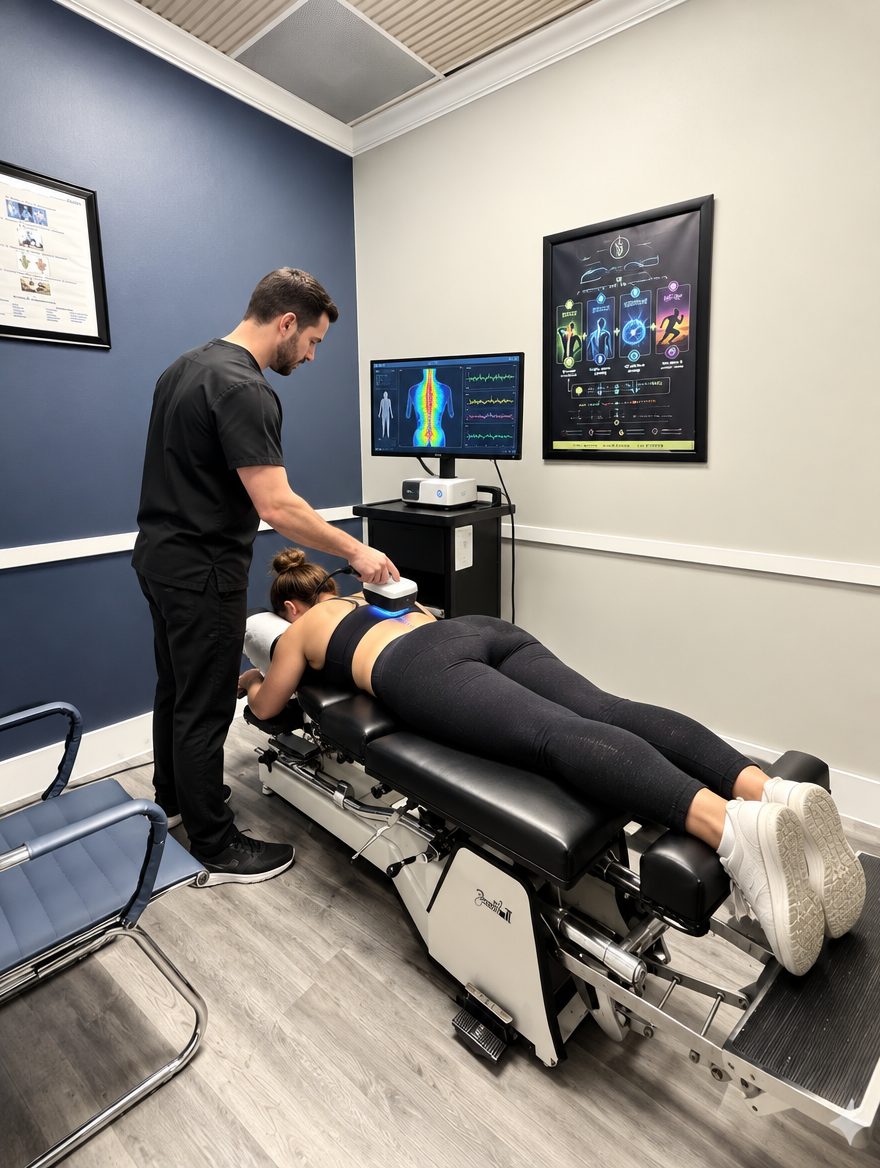
Spinal decompression in Parkland is built around a 20-minute session that most people describe in two words: oddly relaxing. For Parkland patients who have spent weeks guarding a sore back, lying still while a table does the work is a welcome change.
- Position: face up on the Triton DTS, with harnesses at the pelvis and chest for lumbar discs, or a padded cradle for cervical discs.
- Settings: angle, force and cycle pattern are programmed by Dr. Cohen for your disc level and adjusted as you progress.
- Sensation: a slow, smooth pull, a hold, a release — repeated for about 20 minutes. No jerking, no bracing, no needles.
- Pairing: a specific chiropractic adjustment, cold laser or PEMF in the same visit, depending on your plan.
Expect to feel lighter or mildly, pleasantly sore afterward. For the rest of the day we ask you to avoid heavy lifting and prolonged sitting; if long days behind a desk or a steering wheel is part of your routine, we will time your appointments so the drive is not right after the session.
Where does decompression sit in the 4R Method?
Patients from Parkland sometimes arrive having been quoted a fixed number of decompression sessions somewhere else. We do it differently. The 4R Method — Repair, Rebuild, Regenerate, Refine — places decompression in Repair, and the number of sessions follows the re-scans, not a package.
Phase 1 · Repair
Three to five visits a week for four to eight weeks, with the Triton DTS at the center of each visit and a specific adjustment, cold laser or PEMF alongside it. The goal is measurable: surface EMG and thermal re-scans that show the nerve irritation settling, matched by less leg or arm pain in your day.
Phase 2 · Rebuild
Two to three visits a week for eight to sixteen weeks. Decompression tapers as physical therapy, corrective chiropractic protocols and Graston soft-tissue work rebuild the core, hips and curves that let the disc get hurt in the first place. This is the phase that keeps youth soccer and baseball at Pine Trails Park from undoing the Repair work.
Phases 3 and 4 · Regenerate and Refine
Red light and PEMF about twice a week for two or more months, then a monthly tune-up. Some degenerative-disc patients keep an occasional decompression session in Refine as insurance against flare-ups.
What does the evidence say, who should not have it, and what happens at your first two visits?
Three questions Parkland patients ask before they book: does it work, is it safe for me, and what happens first. On the first, the evidence is promising but still developing — a BMC Musculoskeletal Disorders cohort found restored disc height and less discogenic pain after a decompression program (Apfel et al., 2010), and NINDS confirms most low back pain improves with non-surgical care (NINDS, Back Pain). We track every case with re-scans so you can see the change rather than take our word for it.
Is it safe for me?
For most spines, yes, and the exam is how we make sure. We do not decompress during pregnancy or with spinal fracture, significant osteoporosis, tumor or infection, unstable spondylolisthesis, hardware at the treated level, abdominal aortic aneurysm or a harness-sensitive hernia, or severe neuropathy. Healed surgery without hardware is usually fine after a records review. Loss of bladder or bowel control, groin numbness, fast-progressing weakness or back pain with fever need a doctor or urgent care today, not a decompression table.
What happens first
Visit one is measurement — history, hands-on exam with nerve-tension and neurological testing, surface EMG and thermal scans, X-rays when indicated, plus a look at any MRI you already have. Visit two is your report of findings and the first session, with Dr. Jared Cohen, DC mapping the program onto the 4R phases. Spinal decompression in Parkland is prescribed from that data, never assumed. The 60-second spine assessment gets us started before you arrive.
Getting to our Coral Springs clinic from Parkland
From Heron Bay or Parkland Golf & Country Club, head south on Coral Ridge Drive across the Sawgrass Expressway; the clinic is on Coral Ridge Drive just south of the expressway, before Wiles Road. From east Parkland, take Hillsboro Boulevard west to Coral Ridge Drive, then south.
There is free parking at the door and no building to navigate — you walk straight into reception. For a same-day appointment, call (954) 341-2256 before you leave Parkland, or book online.
| Monday | 9:00 am – 7:00 pm |
|---|---|
| Tuesday | 9:00 am – 7:00 pm |
| Wednesday | 3:00 pm – 7:00 pm |
| Thursday | 9:00 am – 7:00 pm |
| Friday | 9:00 am – 12:00 pm |
| Saturday – Sunday | Closed |
The Spine and Wellness Center
5675 Coral Ridge Drive, Coral Springs, FL 33076
Phone: (954) 341-2256
Get directions from Parkland on Google Maps
What patients say
A Google review from a patient who, like you, comes to us from Parkland:
“My first time seeing a chiropractor I was nervous, but the whole office is welcoming and the doctors were so helpful. I trusted them enough to fix me — they make you feel brand new.”
Related care for Parkland residents
Start with the full guide to spinal decompression, then explore the other care we provide for Parkland patients.
Spinal decompression therapy — the full guide
How the Triton DTS works, who it helps, what the research says and where it sits in the 4R Method.
Learn moreChiropractic care for Parkland
Your Parkland hub: everything we treat, directions, hours and what to expect on your first visit.
Learn moreWhiplash treatment in Parkland
Whiplash treatment for Parkland patients, from our Coral Springs clinic.
Learn moreBack pain relief in Parkland
Back pain relief for Parkland patients, from our Coral Springs clinic.
Learn moreAll service areas
Every community we serve from Coral Springs, with drive times and the care available for each.
Learn moreServing spinal decompression patients from Parkland across North Broward
Our clinic at 5675 Coral Ridge Drive, Coral Springs, FL 33076 serves Coral Springs, Parkland, Coconut Creek, Margate, Boca Raton, Tamarac, Pompano Beach and Deerfield Beach. Same-day appointments are usually available — call (954) 341-2256 or book online. Most patients from Parkland and Coral Springs are here in under 15 minutes.
Medically reviewed by Dr. Jared Cohen, DC — Co-Founder & Clinical Director, The Spine and Wellness Center. Last reviewed October 2026.
Frequently asked questions
Does decompression work for neck disc problems too?
Yes. Cervical decompression uses a padded cradle rather than a pelvic harness, with the angle and force programmed for the C5–C7 levels that most often pinch a nerve into the shoulder, arm or hand. The session is shorter and gentler than lumbar decompression and is paired with a specific adjustment and cold laser for the inflamed tissue.
Do I need an MRI before starting decompression?
Not necessarily. Bring any imaging you already have and we will review it, but your first visit includes a hands-on exam with nerve-tension and neurological testing, surface EMG and thermal scanning, and digital X-rays when indicated. If the picture is unclear or there are red flags, we will refer you for an MRI before prescribing decompression.
What should I do after a decompression session?
Keep it easy for the rest of the day: avoid heavy lifting, prolonged sitting and aggressive stretching so the disc keeps the space it gained. Short walks are fine and encouraged. Drink water, use ice over the area if it feels sore, and follow the home-care guidance in your plan. Report any new numbness, tingling or weakness promptly.
Do you offer same-day appointments for Parkland patients?
Usually, yes. Same-day appointments are often available at our Coral Springs clinic, about 5 to 10 minutes from Parkland, so spinal decompression in Parkland can start the week you call. Your first visit is a measurement visit — exam, surface EMG and thermal scans, X-rays when indicated — and your plan and treatment begin on visit two, typically within a few days.
How far is the clinic from Heron Bay?
From Heron Bay, plan on about 5 to 10 minutes to 5675 Coral Ridge Drive, Coral Springs, FL 33076 — straight down Coral Ridge Drive or University Drive. The clinic is on Coral Ridge Drive just south of the Sawgrass Expressway, with free parking at the door.
Is there parking at the clinic?
Yes. Free parking is right outside the door at 5675 Coral Ridge Drive — no garage, no meters, no validation. Most Parkland patients find it simpler than parking near the coast or at a medical tower, and you walk straight into reception.

Same-day appointments
Let's fix the cause.
Measure first, then treat — a plan built on your actual structure.
- Same-day appointments are usually available
- Our team calls you back to confirm your visit
- Coral Springs, serving Parkland & North Broward since 2005
Prefer to talk now? Call or text (954) 341-2256