
Wellness & Lifestyle · 6 min read
The Benefits of Regular Chiropractic Adjustments
Most people find us because something hurts. The ones who stay find that consistent, drug-free care supports mobility, posture, nerve function and the way they feel day to day.

Quick answer
Regular chiropractic adjustments keep spinal joints moving, which reduces muscle tension, supports healthy nerve signaling and helps posture hold. Beyond pain relief, patients commonly report better mobility, fewer tension headaches, easier sleep and fewer flare-ups. The right frequency depends on your phase of care — from several visits a week during repair to a monthly tune-up for maintenance.
What a chiropractic adjustment actually does
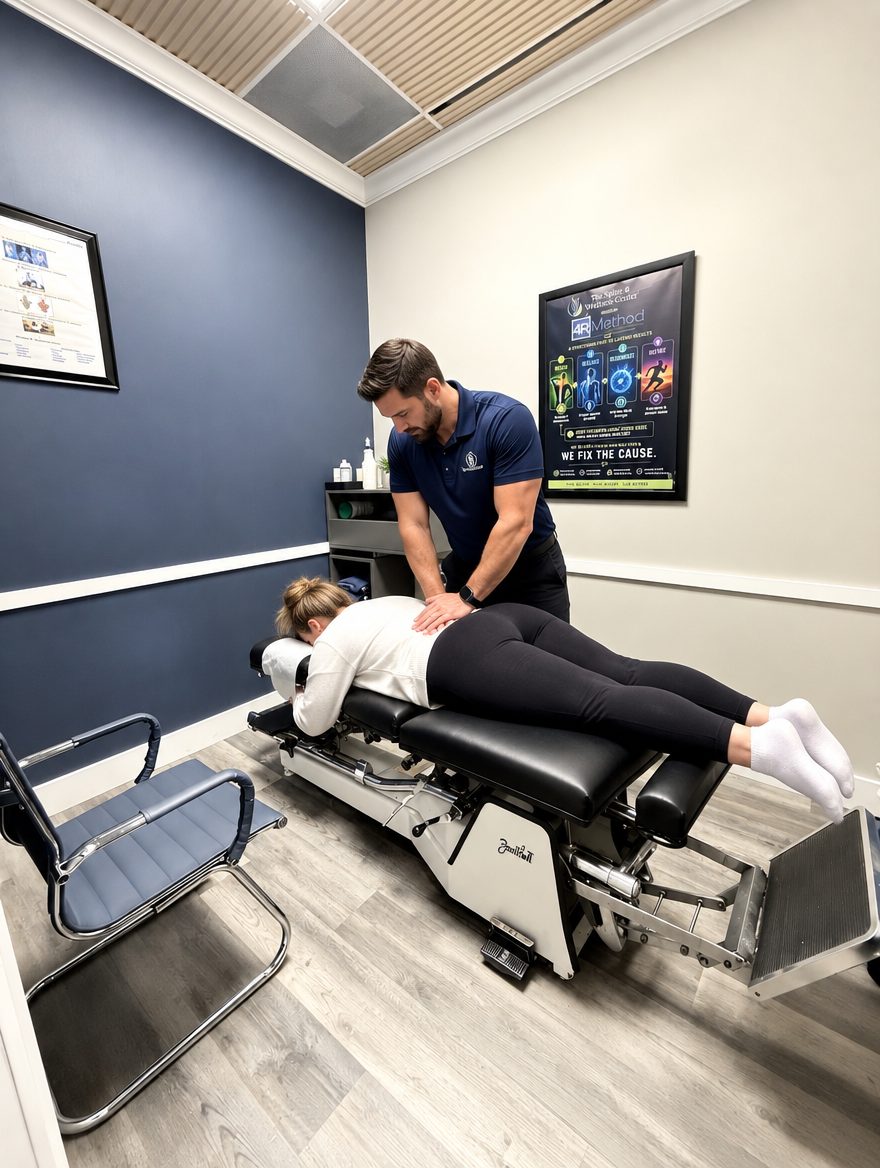
Regular chiropractic adjustments make more sense once you know what a single one does. An adjustment is a precise, controlled movement applied to a joint — most often in the spine — to restore its normal motion. Joints that stop moving well irritate the nerves and muscles around them, and the body responds with guarding, stiffness and often pain. Restoring motion switches that cycle off.
Because the spine houses and protects the nervous system, keeping it moving well is not only about your back. Joint motion feeds the brain a constant stream of position information; stiff segments send less, and the nervous system compensates with tension elsewhere. That is why a neck adjustment can ease a headache and why a pelvic adjustment can change how a knee feels.
The National Center for Complementary and Integrative Health summarizes the evidence: spinal manipulation is a well-supported option for low back pain and has evidence for neck pain and certain headaches, with a good safety record when performed by a trained provider. Our chiropractic care page explains the techniques we use in Coral Springs.
7 proven benefits of regular chiropractic adjustments
- Improved joint mobility and flexibility. Restricted joints stiffen further over time; regular care maintains range of motion in the spine and extremities, which is why athletes and active adults in Coral Springs and Parkland build it into their routine.
- Better posture. Desk hours, phones and driving pull the head forward and round the shoulders. Ongoing care paired with posture correction keeps the upper back and neck extending so the retraining holds.
- Less muscle tension and stiffness. Muscles guard stiff joints. Restore the motion and the guarding eases — the tight traps and locked low back that build between visits.
- Healthier nerve communication. Irritated joints and the tissue around them can interfere with nerve signaling; keeping segments moving reduces that interference.
- Fewer, milder tension headaches. Many headaches originate in the upper neck. Patients with that pattern often report fewer and less intense episodes with consistent care — see headache treatment.
- Easier sleep and lower stress load. Less pain and less muscle tension make it easier to settle at night; we explain the stress–spine loop in how stress affects your spine.
- Fewer flare-ups. Catching restriction before it becomes a ‘back that went out’ is the practical, everyday value of staying consistent.

How often should you get adjusted? It depends on the phase
There is no universal schedule, and anyone who gives you one without examining you is guessing. Frequency follows the phase of care in our 4R Method:
- Repair — 3–5 visits a week for 4–8 weeks when pain is active and a disc, joint or nerve needs pressure taken off. Visits are frequent because tissue changes respond to repetition.
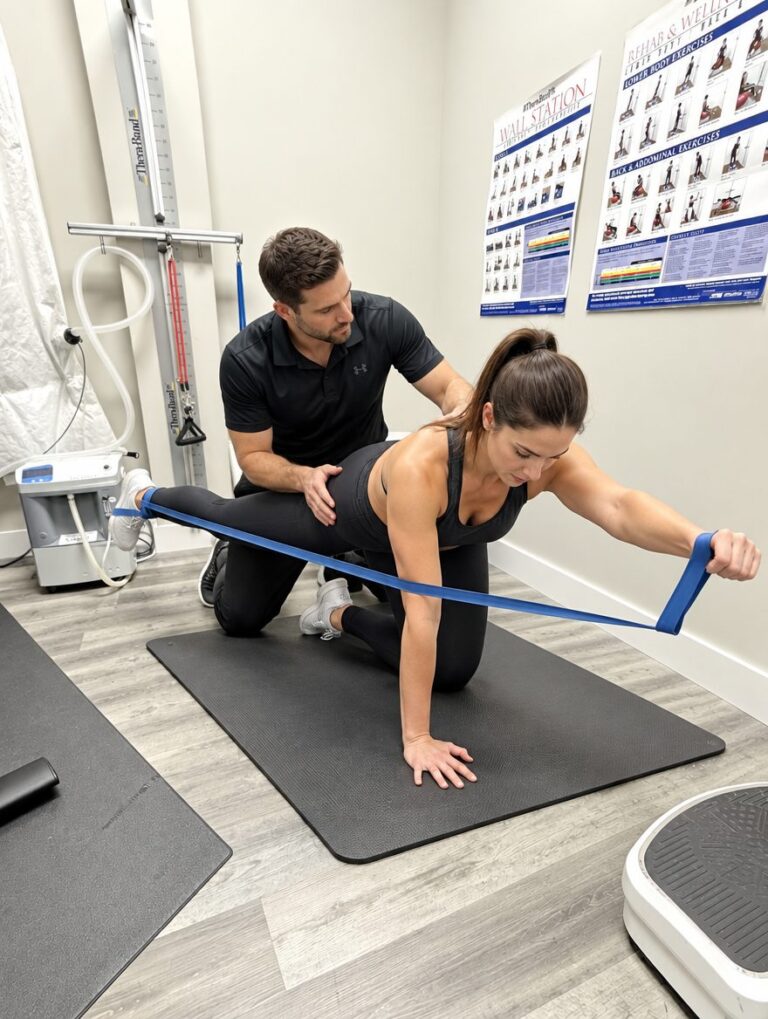
- Rebuild — 2–3 visits a week for 8–16 weeks while posture is corrected and the muscles that hold the correction are strengthened. Adjustments and rehab run side by side; see why physical therapy and chiropractic work better together.
- Regenerate — about 2 visits a week for 2+ months as cellular recovery tools (red light, PEMF, oxygen therapy) are layered in.
- Refine — a monthly tune-up for most people, more often for heavy lifters, golfers and desk-bound patients with a long history.
Maintenance care is not about being adjusted forever because you are ‘hooked’. It is the same logic as the dentist: a short, scheduled visit that finds restriction early costs far less time than a flare-up that keeps you off the pickleball court for a month. Patients who finish Rebuild and stop entirely are the ones we most often see back in Repair a year later.
Who benefits most from regular chiropractic adjustments
- Desk workers and commuters whose neck and upper back stiffen weekly under screens and the Sawgrass
- Athletes and weekend warriors who want to stay mobile and catch problems before they bench them
- People with a history of disc, sciatica or ‘back goes out’ episodes — the group with the most to gain from catching restriction early
- Adults with arthritis who need stiff joints kept moving gently and consistently
- Headache sufferers whose pattern starts at the base of the skull
- Parents, tradespeople and anyone who lifts and twists for a living
Regular chiropractic adjustments are not for everyone, and we say so. Certain conditions change the technique or rule it out: significant osteoporosis, active inflammatory disease, some vascular conditions and recent fractures. That is why care begins with measurement rather than a quick crack.
Chiropractic care
Specific, measured adjustments matched to your spine and your goals.
Learn morePosture correction
Retraining alignment so the adjustment holds between visits.
Learn moreHeadache treatment
For the tension and cervicogenic headaches that start in the neck.
Learn moreSame-day appointments
Usually available for new and returning patients in Coral Springs.
Learn moreWhat your first two visits look like
Visit one is measurement. We talk through your history and goals, perform a hands-on structural exam, run surface EMG and thermal scans to see where the muscles are guarding, and take digital X-rays when indicated. Visit two is your full report of findings and your plan — which phase you start in, how often, and for how long — building on the care that usually starts at visit one. We have run care this way in Coral Springs since 2005, and we walk through it in detail in what to expect at your first chiropractic visit.
From there, every re-evaluation compares you to your own baseline: posture photos, scans and range of motion. Regular chiropractic adjustments are a means to an end — a spine that moves well enough that you stop thinking about it. Book a spine assessment to find out where you are starting from.
When to see a doctor today
New numbness with weakness, loss of bladder or bowel control, the worst headache of your life, or back or neck pain after a significant injury — please see a doctor or urgent care today. Those are not patterns we treat in the office.
Serving wellness care patients across North Broward
Our clinic at 5675 Coral Ridge Drive, Coral Springs, FL 33076 serves Coral Springs, Parkland, Coconut Creek, Margate, Boca Raton, Tamarac, Pompano Beach and Deerfield Beach. Same-day appointments are usually available — call (954) 341-2256 or book online. Most patients from Parkland and Coral Springs are here in under 15 minutes.
Medically reviewed by Dr. Jared Cohen, DC — Co-Founder & Clinical Director, The Spine and Wellness Center. Last reviewed October 2026.
Frequently asked questions
How often should I get regular chiropractic adjustments?
It depends on the phase of care. During active repair, 3 to 5 visits a week for 4 to 8 weeks; during rebuilding, 2 to 3 a week for 8 to 16 weeks; for maintenance, most people do well with a monthly visit. Your schedule is set from your exam and adjusted at each re-evaluation, never from a template.
Is it safe to get adjusted regularly?
For most people, yes. Spinal manipulation by a trained provider has a good safety record, and regular visits allow technique to be matched to how your spine responds. Conditions such as significant osteoporosis, active inflammatory disease or recent fracture change the approach, which is why we examine and image when indicated before treating.
Do regular chiropractic adjustments help with headaches?
Many headaches originate in the upper neck, and patients with that pattern commonly report fewer and milder episodes with consistent care. The evidence is strongest for tension-type and cervicogenic headaches. Migraines are more complex, though neck care often reduces a trigger. We assess the pattern before promising anything.
Will I become dependent on adjustments?
No. An adjustment restores motion; it does not create a need for more. Patients continue maintenance care for the same reason they keep exercising: it keeps a problem from rebuilding. If your spine stays mobile and your rehab holds, your visits get further apart, and that is the goal.


Same-day appointments
Reading about it is step one.
Step two is a measurement. Visit one we measure — and usually begin care; visit two you get your full findings and plan.
- Same-day appointments are usually available
- Our team calls you back to confirm your visit
- Coral Springs, serving Parkland & North Broward since 2005
Prefer to talk now? Call or text (954) 341-2256