
Back & Neck · 6 min read
Scoliosis: Symptoms and Management Options
What scoliosis is, how to spot it in children and adults, and the conservative options that support comfortable, functional movement — from Dr. Jared Cohen, DC in Coral Springs.

Quick answer
Scoliosis is a sideways curve of the spine, usually with some rotation. Management depends on age, curve size and whether it is progressing: small curves are monitored, growing curves may need bracing, and conservative care — specific adjustments, corrective exercise, posture work and soft-tissue therapy — supports comfort, mobility and function at every stage.
What scoliosis is (and what the curve number means)
Good scoliosis management starts with understanding the curve. Seen from behind, a healthy spine looks straight; scoliosis adds a side-to-side curve shaped like a C or an S, usually with some rotation of the vertebrae. That rotation is why a rib hump shows up when a child bends forward, and why one shoulder blade sits higher than the other.
Curves are measured on an X-ray as a Cobb angle. Under about 10 degrees is considered within normal variation; 10–25 degrees is a mild curve that is usually monitored; 25–40 degrees in a growing child is where bracing is typically discussed; and larger curves are referred for a surgical opinion. The American Academy of Orthopaedic Surgeons notes that most adolescent curves are mild and never need surgery.
The number guides how closely we watch and what we do, but it is not the whole story. Two people with the same angle can feel completely different depending on posture, muscle balance, disc health and how the pelvis sits underneath the curve.
Types of scoliosis and the signs to watch for
- Idiopathic: the most common type, with no single known cause, usually appearing during the adolescent growth spurt.
- Congenital: present at birth because of how the vertebrae formed.
- Neuromuscular: related to conditions that affect muscle and nerve control.
- Degenerative (adult): develops later in life as discs and facet joints wear unevenly — often alongside degenerative disc disease.
In children and teens
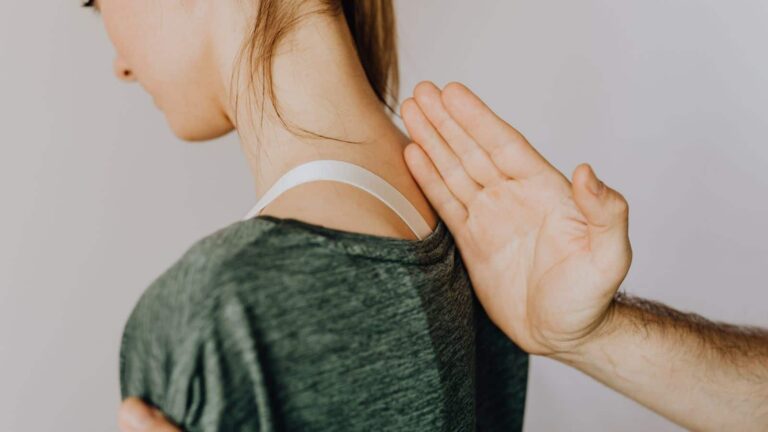
Growing kids rarely have pain, so visible signs matter most: uneven shoulders or shoulder blades, one hip higher than the other, a visible lean, clothes that hang unevenly, or a rib hump when bending forward at the waist. Curves can change quickly during growth spurts, which is why we recommend a quick screen for Coral Springs and Parkland students around ages 10–14.
In adults
Adult scoliosis more often comes with symptoms: back pain and stiffness, muscle fatigue on one side, a noticeable change in posture or height, and reduced endurance for standing. Some adults have had a curve since adolescence; others develop a new degenerative curve in their 50s and 60s.

6 scoliosis management options we use and recommend
Management depends on age, curve size and location, and whether the curve is progressing. These six cover what conservative scoliosis management looks like in our Coral Springs office and when each fits.
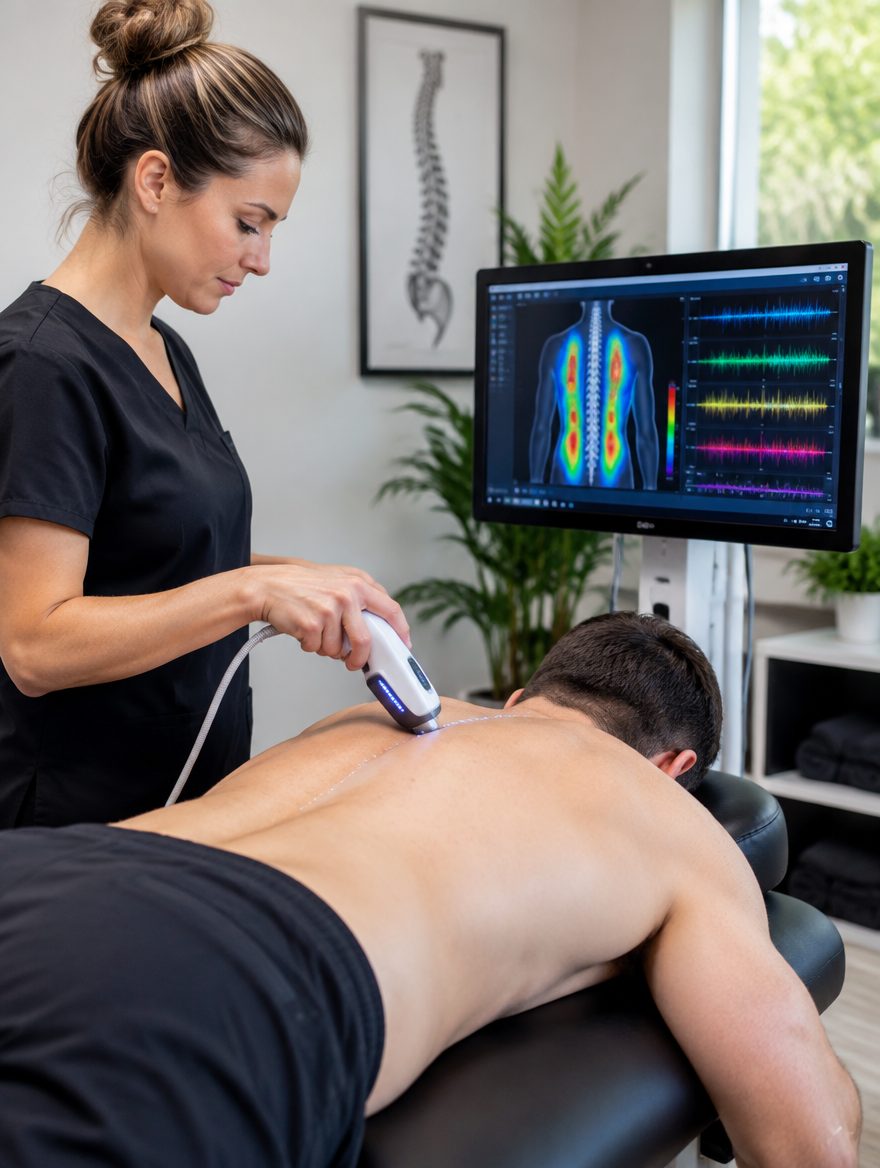
- Monitoring. Mild curves are re-measured every 4–6 months during growth and every 1–2 years in adults. Postural photos, a surface EMG scan and, when indicated, a standing X-ray let us catch change early.
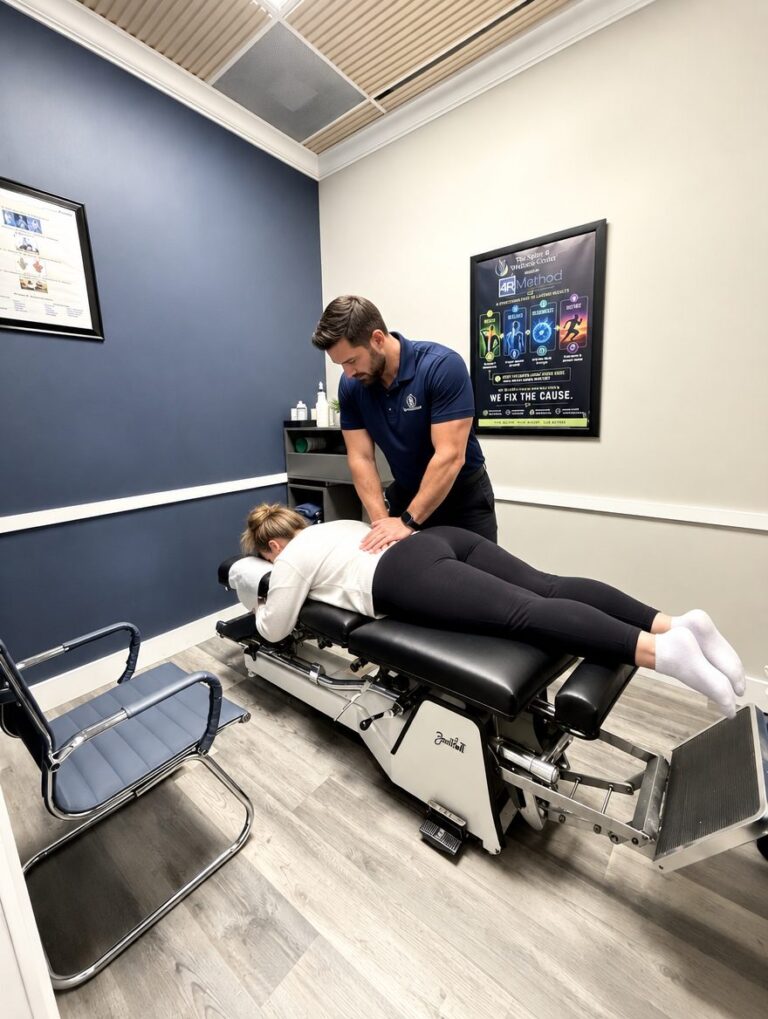
- Gentle, specific chiropractic care. Adjustments do not straighten a structural curve, but restoring motion to stiff segments and the pelvis reduces pain and muscle guarding. Technique is matched to the patient — lower force for kids and for adults with degenerative changes. See scoliosis treatment.
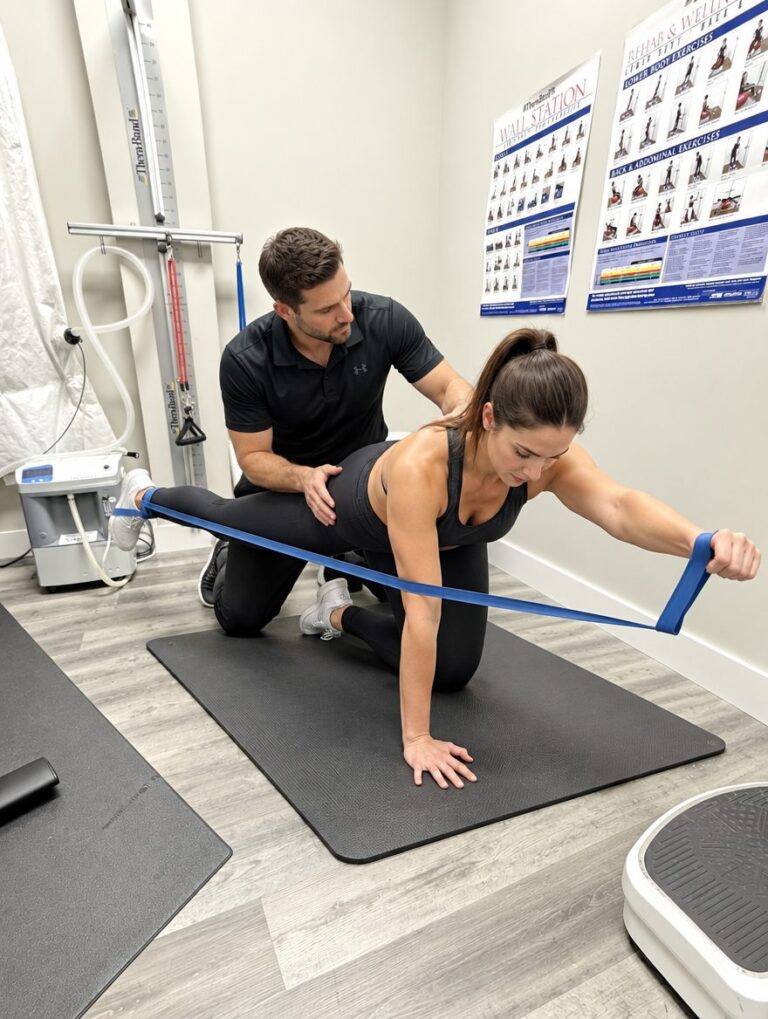
- Scoliosis-specific and corrective exercise. Exercises that train the trunk to de-rotate and elongate (the principles behind Schroth-style programs), plus core and hip strengthening, help the body hold a better position. Our physical therapy team builds and progresses these.
- Posture and ergonomics. Backpack weight, screen height and sitting habits all load a curve asymmetrically. Simple fixes compound over years — we wrote a practical guide in how to fix your posture, and our posture correction program goes deeper.
- Soft-tissue therapy. Massage, Graston and cupping release the overworked muscles on the concave side of the curve and the chronically tight hip and chest muscles that pull on it.
- Bracing and specialist referral. For growing curves above roughly 25 degrees we coordinate with a pediatric orthopedist about bracing; for large or rapidly progressing curves we refer for a surgical opinion. Knowing when to refer is part of good management.
Where scoliosis management sits in the 4R Method
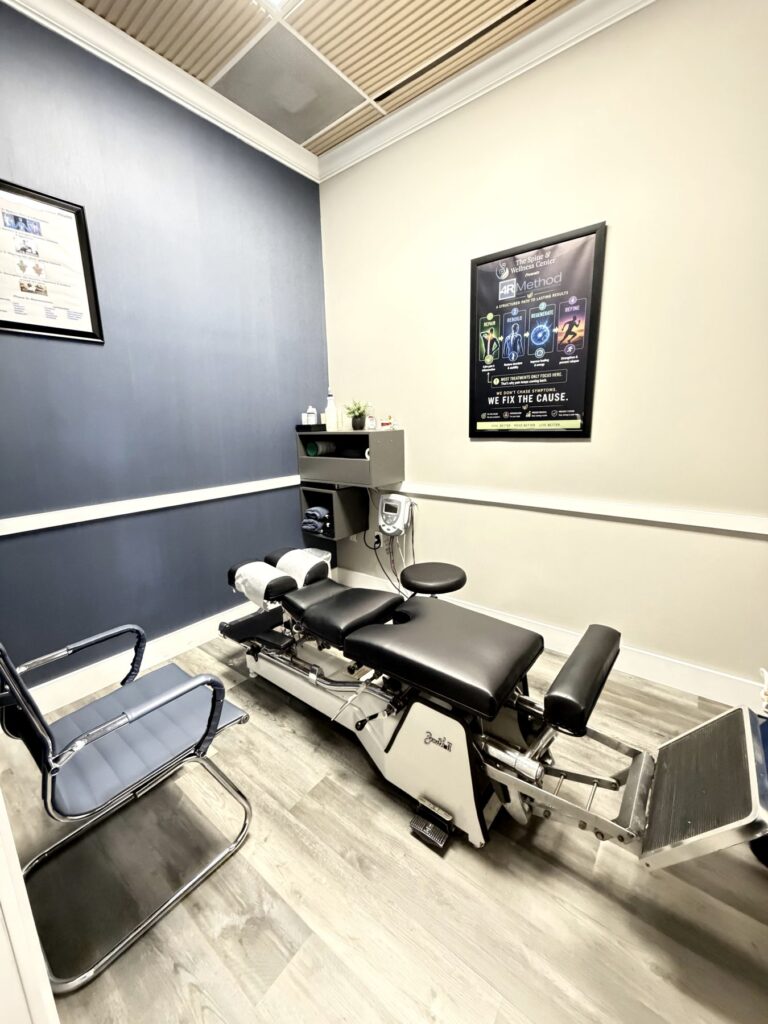
Our care follows the 4R Method: Repair, Rebuild, Regenerate, Refine. For scoliosis, Repair (typically 3–5 visits a week for 4–8 weeks when pain is active) calms the irritated joints and muscles. Rebuild (2–3 visits a week for 8–16 weeks) is where most of the work happens: corrective exercise, posture retraining and strengthening so the spine is supported in its best available position.
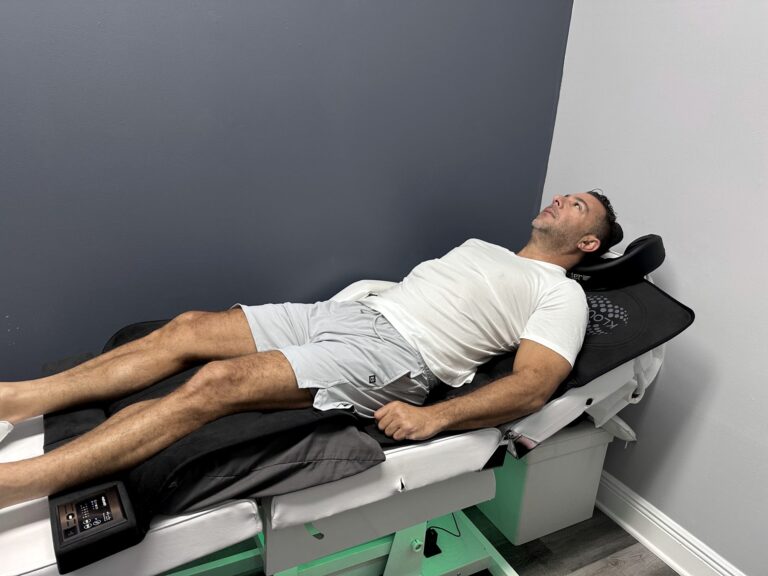
Regenerate adds recovery tools such as red light and PEMF, and Refine is the long game — monthly check-ins and re-measurement so a curve is tracked, not forgotten. For a growing child that cadence matters most; for an adult it is what keeps a degenerative curve from quietly stealing mobility.
It begins with measurement. Your first visit includes a conversation, a hands-on structural and postural exam, surface EMG and thermal scanning, and digital X-rays when indicated so we can measure the curve. Visit two is the report of findings and plan. Parents considering care for a child can also read is pediatric chiropractic safe?
Scoliosis treatment
Conservative scoliosis care for children, teens and adults in Coral Springs.
Learn morePosture correction
Retraining alignment so a curve is loaded as evenly as possible.
Learn morePhysical therapy
Corrective exercise programs built and progressed by our rehab team.
Learn moreChiropractic care
Gentle, specific adjustments matched to age and curve.
Learn moreLiving well with scoliosis: habits that help
- Stay active. Swimming, walking, cycling and most sports are encouraged; strong, balanced muscles support the spine better than rest.
- Keep backpacks light and on both shoulders; set screens at eye level.
- Alternate sides for carrying bags and children; avoid always sleeping curled toward one side.
- Do the home exercise program on the days you do not see us — consistency, not intensity, is what changes a curve’s behavior.
- Re-measure on schedule. A curve that has not been checked in two years is a curve nobody is managing.
When to be seen promptly
A curve that visibly changes over a few months in a child, new leg weakness or numbness, changes in bladder or bowel control, or breathing difficulty with a large curve should be evaluated promptly — please see a doctor or urgent care today for the last three.
Serving scoliosis patients across North Broward
Our clinic at 5675 Coral Ridge Drive, Coral Springs, FL 33076 serves Coral Springs, Parkland, Coconut Creek, Margate, Boca Raton, Tamarac, Pompano Beach and Deerfield Beach. Same-day appointments are usually available — call (954) 341-2256 or book online. Most patients from Parkland and Coral Springs are here in under 15 minutes.
Medically reviewed by Dr. Jared Cohen, DC — Co-Founder & Clinical Director, The Spine and Wellness Center. Last reviewed October 2026.
Frequently asked questions
Can chiropractic care straighten scoliosis?
No treatment short of surgery reliably reduces a structural Cobb angle, and we never promise that. What conservative scoliosis management can do is reduce pain, improve mobility and posture, strengthen the muscles that support the curve, and track the curve closely so any progression is caught early and referred appropriately.
How often should a scoliosis curve be checked?
During a child's growth spurt, every 4 to 6 months, because curves can change quickly then. After growth is complete and in adults, every 1 to 2 years is typical unless symptoms change. We combine postural photos, surface EMG and standing X-rays when indicated so we compare like with like.
Does scoliosis get worse with age?
Not always. Mild adolescent curves often stay stable after growth ends. Larger curves and adult degenerative curves can progress slowly as discs and joints wear unevenly, which is why keeping the supporting muscles strong and the joints mobile matters more as the years go on.
Will my child need a brace?
Bracing is usually discussed for growing children whose curve measures above about 25 degrees or is clearly progressing. We coordinate with a pediatric orthopedist for that decision. Children with smaller curves are generally monitored and supported with exercise and posture work.
Same-day appointments
Reading about it is step one.
Step two is a measurement. Visit one we measure — and usually begin care; visit two you get your full findings and plan.
- Same-day appointments are usually available
- Our team calls you back to confirm your visit
- Coral Springs, serving Parkland & North Broward since 2005
Prefer to talk now? Call or text (954) 341-2256