
Headaches & Conditions · 6 min read
Treating plantar fasciitis in Coral Springs and Parkland
Sharp, stabbing heel pain with your first steps in the morning is the hallmark. Here is what is happening in the foot and how we treat the cause instead of numbing the symptom.

Quick answer
Plantar fasciitis is irritation of the thick band of tissue running from the heel to the toes, producing sharp heel pain with the first steps of the day. Treating it means calming the inflamed fascia with cold laser and shockwave, releasing the thickened tissue and tight calf with Graston, restoring foot and ankle mechanics, and correcting the gait and footwear that overloaded it. Most patients improve within several weeks.
What exactly is plantar fasciitis?
Plantar fasciitis is irritation of the plantar fascia, the thick band of connective tissue that runs along the bottom of the foot from the heel bone to the base of the toes. Its job is to support the arch and act as a spring with every step. When it is overloaded faster than it can repair, the tissue near the heel thickens, becomes inflamed and tears microscopically, and the bottom of the heel hurts whenever it is asked to bear weight.
It is the most common cause of heel pain we see at The Spine and Wellness Center in Coral Springs, and it has a signature: the pain is worst with the first steps out of bed or after sitting, eases as you walk and warm up, then returns after long standing or exercise. The American Academy of Orthopaedic Surgeons notes that it affects roughly two million people a year and that most cases improve with non-surgical care.
What overloads the fascia is usually a combination: tight calves and Achilles that pull on the heel, flat or very high arches, a sudden increase in walking or running, long hours standing on hard floors, unsupportive shoes, and extra body weight. Middle age and the Florida habit of living in flip-flops both raise the odds.
Symptoms that point to plantar fasciitis
- Sharp or stabbing pain at the bottom of the heel with the first steps in the morning
- Pain that eases with movement but returns after rest or by the end of a long day on your feet
- Tenderness when you press the inside front edge of the heel
- Pain that is worse after, not during, exercise
- Tightness in the arch, calf and Achilles tendon
Most people who come to us in Coral Springs have had the heel pain for three months or more, having waited for it to pass. The longer the fascia has been thickening, the longer it takes to reverse, which is the strongest argument for an evaluation in the first few weeks rather than the first few months.
Heel pain that is also numb or tingling may be nerve entrapment rather than fascia; pain at the back of the heel is more likely Achilles; and heel pain in a child is often a growth-plate problem. The exam on visit one sorts these out. Please see a doctor or urgent care today for heel pain with fever, redness and warmth, an inability to bear weight after an injury, or sudden swelling.
How we treat plantar fasciitis: 4 tools, one plan
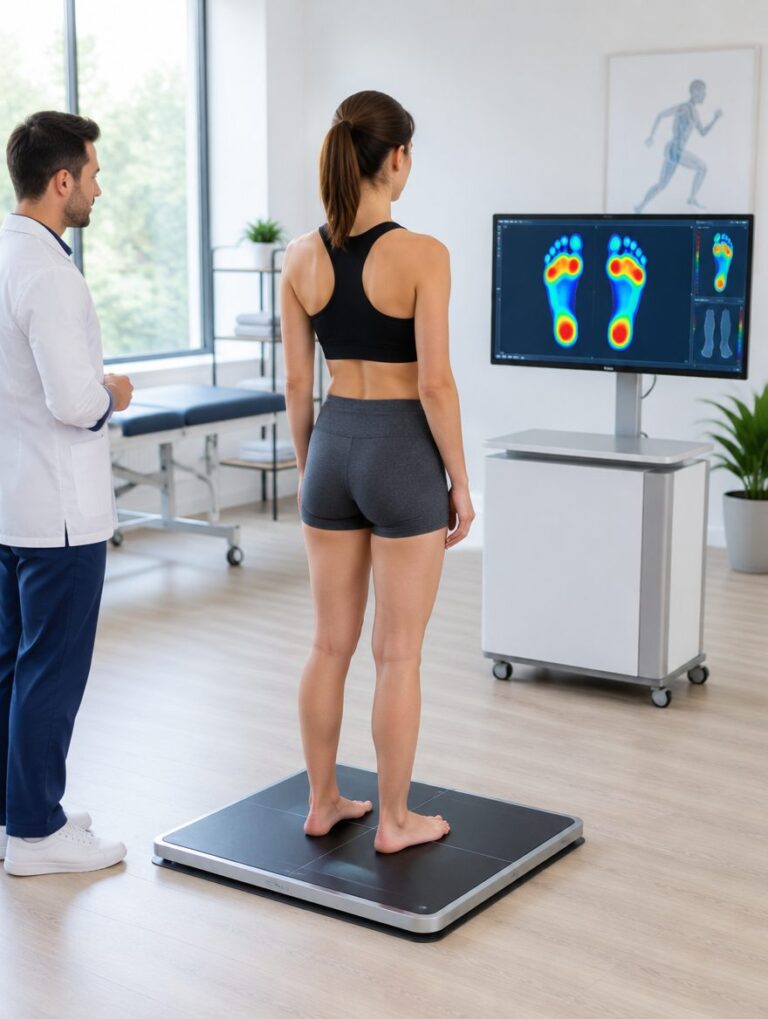
Treating plantar fasciitis well means calming the inflamed tissue and correcting what overloaded it, in that order. Visit one measures: a conversation about your footwear, activity and surfaces; a hands-on exam of the foot, ankle, calf and hip; and a GaitScan pressure-plate analysis of how you load the foot. Visit two is the report of findings and the plan, and Most patients have already begun care on visit one; this is where the full plan takes over. Our plantar fasciitis treatment inside the Repair phase of the 4R Method combines:
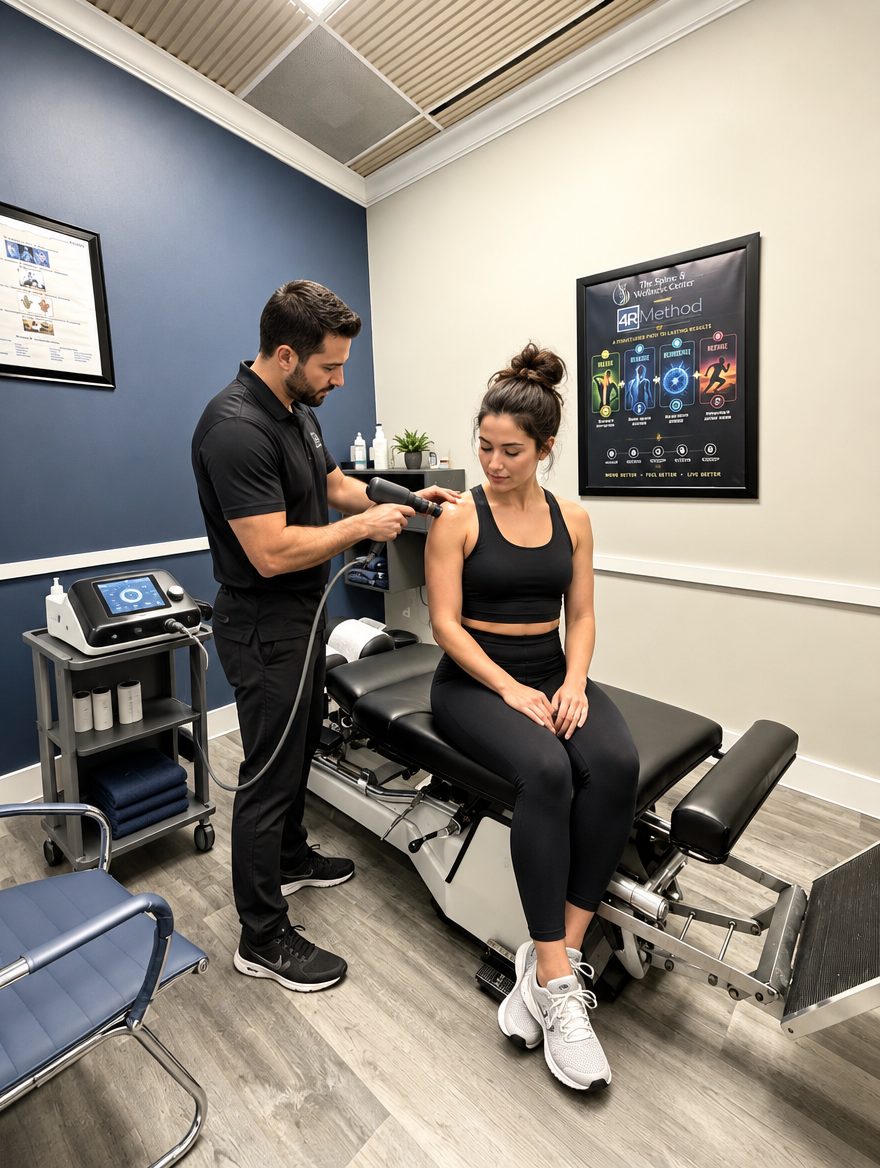
- Acoustic shockwave therapy to restart healing in fascia that has become chronic and thickened. Short sessions, usually once a week for 3–6 weeks.
- Cold laser over the heel attachment to calm inflammation and ease the morning pain while the tissue repairs.
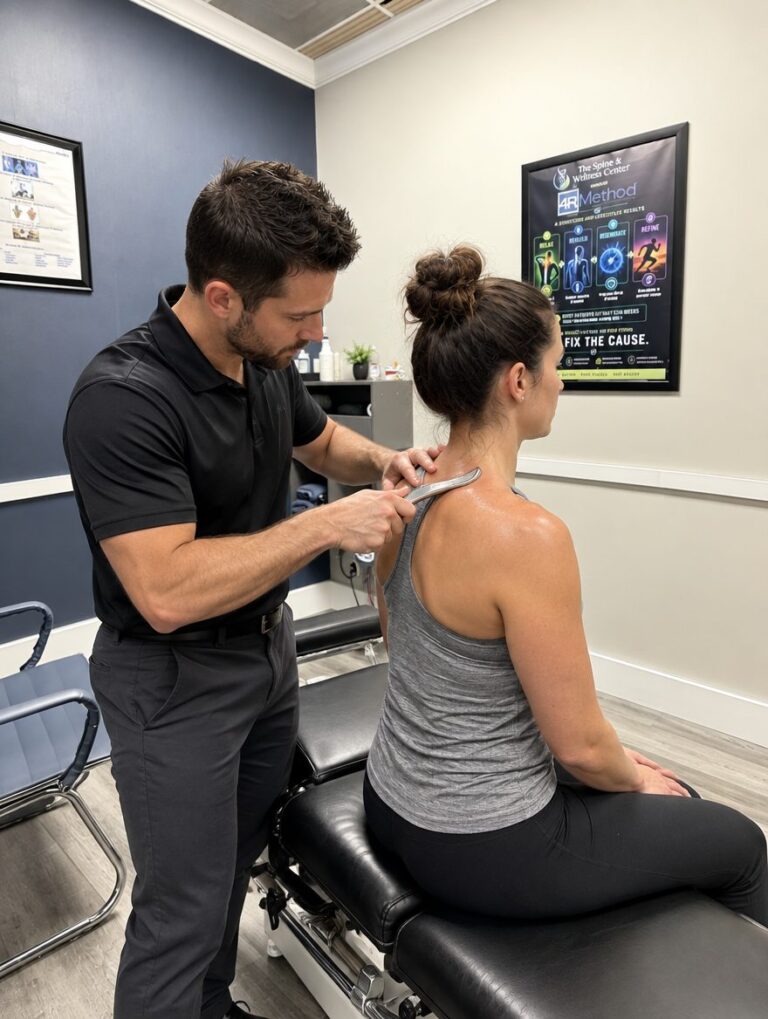
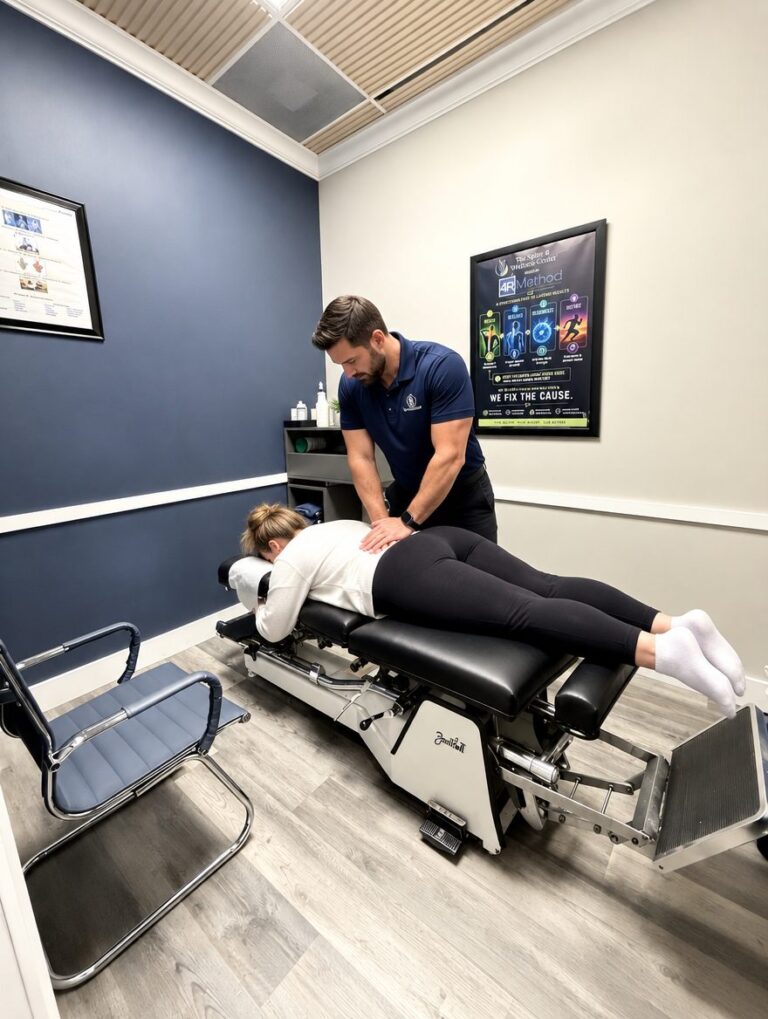
- Graston Technique and myofascial release for the thickened fascia, the tight calf and the Achilles that keeps pulling on the heel.
- Foot and ankle adjustments to restore the joint motion that lets the arch work as a spring, plus elastic taping to support it between visits.

Correcting what overloaded the fascia
Calming the tissue is the first half. The Rebuild phase, 2–3 visits a week for 8–16 weeks, is where plantar fasciitis stops coming back:
- Strengthening the foot’s intrinsic muscles and the calf so the fascia is not doing all the work
- Custom orthotics when the GaitScan shows a collapsing arch or an uneven load; many patients do not need them, and the scan is how we decide
- Footwear changes: supportive shoes at home instead of bare tile, and retiring the worn-out pair
- Hip and knee mechanics, because a weak hip changes how the foot lands; What Causes Hip Pain and Chiropractic Approaches to Knee Pain cover the rest of the chain
Good to know
Cortisone injections can ease the pain for weeks but weaken the fascia with repeated use. We prefer to calm the tissue with laser and shockwave and fix the mechanics, so the relief does not depend on the next shot.
What you can do at home starting today
A few things help while you arrange an evaluation, and they continue to matter throughout care. The full routine is in Plantar Fasciitis Stretches and Relief; the essentials:
- Before your first steps in the morning, sit on the edge of the bed and pull the toes toward you for 30 seconds, three times.
- Roll the arch over a frozen water bottle for five minutes in the evening.
- Stretch the calf against a wall, knee straight and then bent, 30 seconds each, twice a day.
- Wear supportive shoes indoors; bare feet on tile reload the fascia every step.
- Cut back, do not stop: trade impact for cycling or swimming until the morning pain settles.
Stop any stretch if pain radiates or worsens, and please see a doctor or urgent care today for red-flag symptoms. With consistent care, most patients feel meaningful relief within several weeks; heel pain that has been there for months takes longer, which is one more reason to start early. A spine assessment at our Coral Springs clinic, minutes from Parkland, includes the foot and gait evaluation.
Serving heel pain patients across North Broward
Our clinic at 5675 Coral Ridge Drive, Coral Springs, FL 33076 serves Coral Springs, Parkland, Coconut Creek, Margate, Boca Raton, Tamarac, Pompano Beach and Deerfield Beach. Same-day appointments are usually available — call (954) 341-2256 or book online. Most patients from Parkland and Coral Springs are here in under 15 minutes.
Medically reviewed by Dr. Jared Cohen, DC — Co-Founder & Clinical Director, The Spine and Wellness Center. Last reviewed October 2026.
Frequently asked questions
Why does my heel hurt most in the morning?
Overnight the plantar fascia shortens and the inflamed tissue near the heel stiffens. Your first steps suddenly stretch it, producing the classic sharp morning pain that eases as you warm up. Stretching the toes back before standing, and supportive footwear for those first steps, blunt it while treatment addresses the cause.
Can a chiropractor treat plantar fasciitis?
Yes. We treat the cause with shockwave and cold laser for the inflamed fascia, Graston for the thickened tissue and tight calf, foot and ankle adjustments to restore mechanics, and GaitScan analysis to decide whether orthotics are needed. It is a drug-free, non-surgical approach that also addresses the hip and knee mechanics feeding the problem.
How long does plantar fasciitis take to heal?
With consistent conservative care, most patients notice meaningful improvement within several weeks, and the Repair phase typically runs 4–8 weeks. Heel pain that has been present for many months is slower because the fascia has thickened, which is where shockwave helps. The Rebuild phase that follows is what keeps it from returning.
Do I need orthotics for plantar fasciitis?
Not always. A GaitScan pressure-plate analysis on your first visit shows whether your arch collapses or you load one foot unevenly. If it does, custom orthotics take strain off the fascia; if it does not, strengthening, calf flexibility and better shoes are usually enough. The scan is how we decide rather than guess.
Same-day appointments
Reading about it is step one.
Step two is a measurement. Visit one we measure — and usually begin care; visit two you get your full findings and plan.
- Same-day appointments are usually available
- Our team calls you back to confirm your visit
- Coral Springs, serving Parkland & North Broward since 2005
Prefer to talk now? Call or text (954) 341-2256