
Wellness & Lifestyle · 6 min read
Chiropractic care during pregnancy: gentle relief for a changing body
Relaxin, a shifting center of gravity and thirty extra pounds on the low back. Here is why pregnancy aches happen and how low-force care eases them safely.

Quick answer
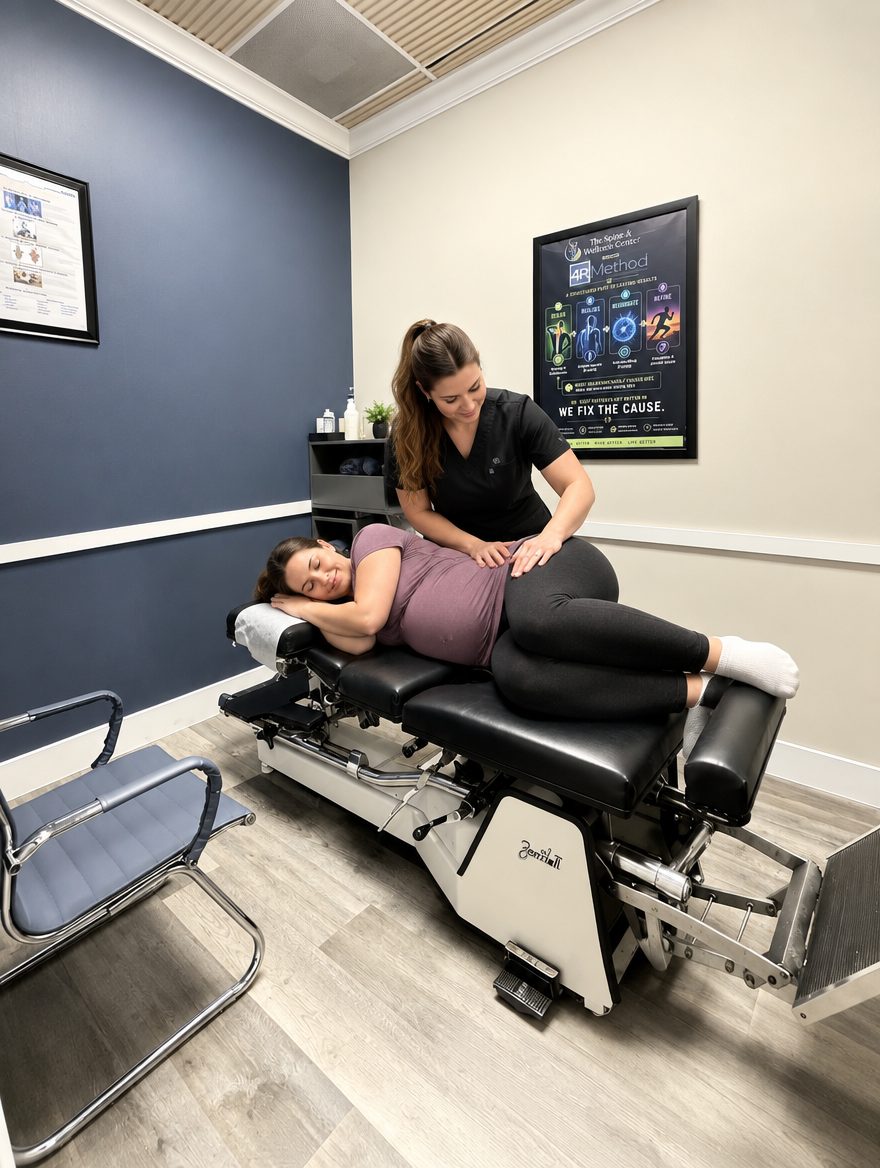
Chiropractic care during pregnancy uses low-force techniques and pregnancy-safe positioning to ease the low back, hip, pelvic and sciatic pain that come with a changing body. It includes Webster-technique pelvic balancing, gentle soft-tissue work and supportive stretching, adapted to each trimester and coordinated with your OB or midwife. It is comfort and mobility care, not a treatment for medical conditions of pregnancy.
Why pregnancy strains the spine and pelvis
Chiropractic care during pregnancy exists because the body changes faster in nine months than at any other time in adult life. As the baby grows, the center of gravity moves forward, the lumbar curve deepens to compensate, and the hormone relaxin loosens the ligaments of the pelvis to prepare for birth. Add the extra weight and the altered walk, and the low back, sacroiliac joints and hips are asked to stabilize a structure that is deliberately becoming less stable.
That is why the aches cluster in the second and third trimesters, and why they tend to be one-sided: when the pelvis is loose, one sacroiliac joint usually takes more of the load than the other. At The Spine and Wellness Center in Coral Springs, Dr. Jared Cohen, DC provides prenatal chiropractic care designed around exactly that mechanism.
The aches we help with most often:
- Low back and sacroiliac pain, usually one-sided, worse standing up from a chair or rolling over in bed
- Sciatica and shooting leg pain from pressure on the nerve roots as the pelvis tilts
- Pelvic and round-ligament discomfort as the body prepares for birth
- Mid-back and rib tension as the ribcage expands
- Neck pain and tension headaches from changed sleep and posture
What chiropractic care during pregnancy involves
Prenatal care is low-force by design. There is no twisting of the abdomen, no pressure on the belly, and every technique is adapted to the stage of pregnancy. A typical plan combines:
- Webster technique pelvic balancing: a specific, gentle analysis and adjustment of the sacrum and pelvis to reduce tension in the surrounding ligaments and restore even motion between the two sacroiliac joints
- Gentle spinal adjustments using light, specific contacts or a drop table, never high-force techniques
- Soft-tissue work on the glutes, hip rotators and low back, and prenatal massage therapy for the muscle tension that builds across a day
- Supportive stretching and movement you can do at home, adjusted trimester by trimester
- Cold laser over an irritated sacroiliac joint when inflammation is part of the picture
Positioning is the quiet half of safety. We use pregnancy pillows and adjustable table sections so you can lie comfortably face-down with the belly supported well into the third trimester, or side-lying when that is more comfortable.

Is it safe? What the evidence and your OB will say
Chiropractic care during pregnancy is widely considered safe when provided by a qualified Doctor of Chiropractic using gentle, pregnancy-appropriate techniques. Serious complications are rare, and the most common side effect is mild soreness for a day after a visit. We do not use spinal traction or decompression during pregnancy, we avoid X-rays entirely, and we adapt or pause care for any complication your OB flags.
The Mayo Clinic lists posture, exercise, heat, massage and conservative care among the ways to manage pregnancy back pain, and advises discussing any treatment with your provider. We ask the same: tell your OB or midwife you are seeing us, and tell us about any bleeding, high blood pressure, placenta concerns or pre-term labor history before the first visit.
Good to know
Prenatal chiropractic supports comfort, mobility and balanced pelvic alignment. It is not a treatment for medical conditions of pregnancy and it does not promise any particular delivery outcome. Anyone who tells you otherwise is overselling it.
What to expect at your first prenatal visit
Visit one is a measurement, not a treatment. We talk through your pregnancy, your history and where it hurts; perform a gentle, hands-on structural exam of the spine and pelvis; and use surface EMG and thermal scanning, which involve no radiation, to see which muscles are overworking. No X-rays during pregnancy. Visit two is the report of findings and a plan written for your trimester, and care begins.
Inside the 4R Method, prenatal care runs a lighter version of the usual phases. Repair is a short run of gentle visits, often once or twice a week for a few weeks, to settle the painful joint. Rebuild is mostly home movement and pelvic stability work. Many mothers then continue a comfort visit every two to four weeks to the due date, and return postpartum when the core and pelvis are ready to be rebuilt properly.
Care adapts as the body does. What is comfortable at 20 weeks is adjusted at 34, and the low-force techniques adapt with you.
Comfort at home between visits
Small habits make a large difference across a long day in the Coral Springs heat:
- Sleep on your side with a pillow between the knees and a small one under the belly; The Best Sleeping Position for Neck Pain covers the head and neck side.
- Stand up from a chair by leading with the chest and pushing through both legs evenly, rather than rolling to one side.
- Walk daily; short, frequent walks keep the sacroiliac joints moving and ease swelling.
- Use a warm pack on the low back and a supportive belly band in the third trimester if your OB agrees.
- Avoid single-leg loads such as carrying a toddler on one hip for long stretches.
Sudden severe abdominal pain, bleeding, leaking fluid, a severe headache with vision changes, or regular contractions before 37 weeks are reasons to please see a doctor or urgent care today, not to book with us. For the ordinary aches, Sciatica Relief Without Surgery explains the nerve side, The Benefits of Massage Therapy covers the muscle side, and our combined pediatric and prenatal page is where many mothers continue once the baby arrives. A spine assessment is the first step.
Serving expecting mothers across North Broward
Our clinic at 5675 Coral Ridge Drive, Coral Springs, FL 33076 serves Coral Springs, Parkland, Coconut Creek, Margate, Boca Raton, Tamarac, Pompano Beach and Deerfield Beach. Same-day appointments are usually available — call (954) 341-2256 or book online. Most patients from Parkland and Coral Springs are here in under 15 minutes.
Medically reviewed by Dr. Jared Cohen, DC — Co-Founder & Clinical Director, The Spine and Wellness Center. Last reviewed October 2026.
Frequently asked questions
Is chiropractic care safe during pregnancy?
Yes, when provided by a qualified chiropractor using gentle, pregnancy-appropriate techniques and positioning. We do not use traction, decompression or X-rays during pregnancy, and we coordinate with your OB or midwife. Mild soreness for a day is the most common side effect; serious complications are rare.
What is the Webster technique?
The Webster technique is a specific, gentle chiropractic analysis and adjustment of the sacrum and pelvis. It reduces tension in the surrounding ligaments and restores even motion between the two sacroiliac joints, which is why it is widely used during pregnancy for low back and pelvic discomfort. It is low-force and involves no twisting of the abdomen.
When during pregnancy can I start chiropractic care?
Care can usually begin at any point in pregnancy and continue through all three trimesters, with techniques and positioning adapted to your stage. Many mothers start in the second trimester when the aches begin, continue to the due date, and return postpartum to rebuild the core and pelvis. Let your OB know you are receiving care.
Does prenatal chiropractic help with delivery?
Prenatal chiropractic focuses on comfort, mobility and balanced pelvic alignment during pregnancy. Many mothers feel more comfortable and move more easily. It should be viewed as supportive comfort care; it is not a treatment for medical conditions of pregnancy and does not guarantee any particular delivery outcome.





Same-day appointments
Reading about it is step one.
Step two is a measurement. Visit one we measure — and usually begin care; visit two you get your full findings and plan.
- Same-day appointments are usually available
- Our team calls you back to confirm your visit
- Coral Springs, serving Parkland & North Broward since 2005
Prefer to talk now? Call or text (954) 341-2256