
Treatment · Coral Springs & Parkland
Spinal Decompression in Pompano Beach, FL
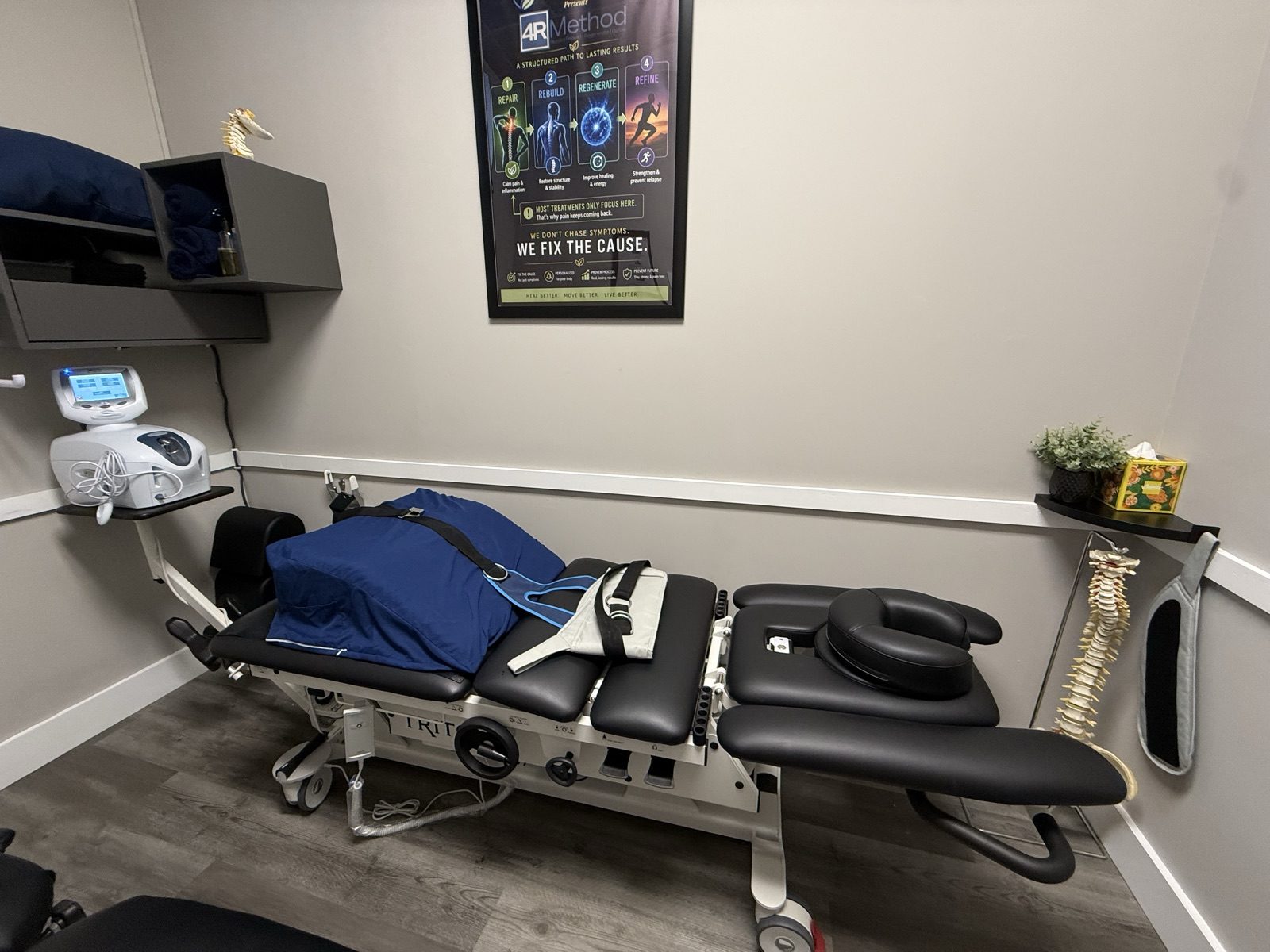
Non-surgical spinal decompression on the Triton DTS table at The Spine and Wellness Center, Coral Springs — about 20 to 25 minutes from Pompano Beach via Atlantic Boulevard or Sample Road west to the Sawgrass Expressway. Same-day appointments are usually available.
Quick answer
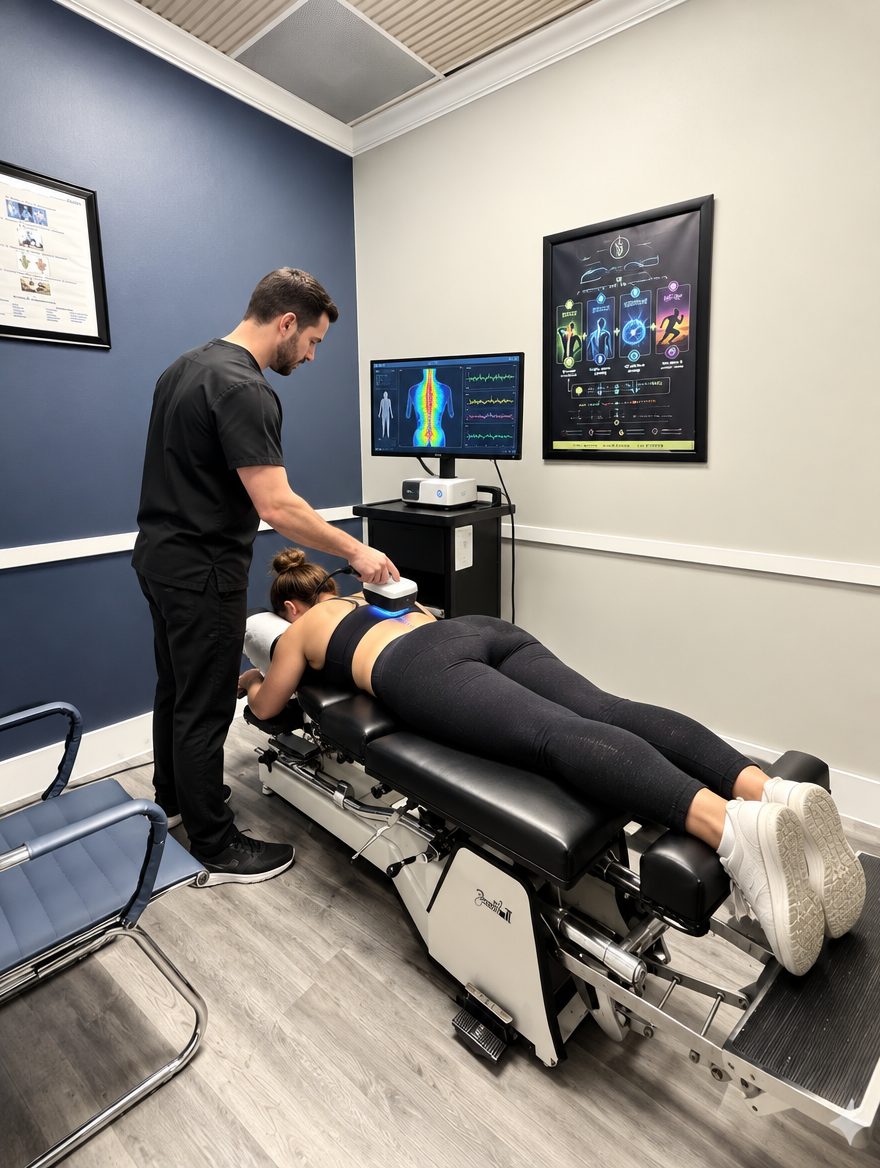
Spinal decompression near Pompano Beach is available at The Spine and Wellness Center, 5675 Coral Ridge Drive, Coral Springs — about 20 to 25 minutes from Pompano Beach. Your first visit is a measurement visit: hands-on exam, surface EMG and thermal scans, and X-rays when indicated. Decompression on the Triton DTS table is set at visit two (initial care often starts on visit one), after your report of findings confirms a disc or nerve pattern.
Why Pompano Beach patients choose us for spinal decompression
When someone from Pompano Beach calls about spinal decompression in Pompano Beach, three things usually settle the decision to come to Coral Springs instead of somewhere closer.
- The drive is easier than it sounds. It is about 20 to 25 minutes via Atlantic Boulevard or Sample Road west to the Sawgrass Expressway, and parking is free, right outside the door. We see patients from the Fisher Family Pier, Pompano Community Park and Palm Aire every week.
- Evening and early slots. Monday, Tuesday and Thursday run until 7:00 pm; Wednesday afternoons and Friday mornings round out the week. Most Pompano Beach patients can fit visits around work and school runs.
- We understand who lives in Pompano Beach. Our typical Pompano Beach patients are Pompano Beach boaters and anglers, golfers from Palm Aire, families from Old Pompano and Pompano Community Park, and I-95 commuters — and the plan reflects those loads, not a template.
What is spinal decompression and how does the Triton DTS table work?
Spinal decompression in Pompano Beach means one specific thing at The Spine and Wellness Center: computer-controlled, non-surgical decompression on the Triton DTS table, about 20 to 25 minutes from Pompano Beach. It is not a stretch, not an inversion table and not old-fashioned traction. It is a programmed cycle of pull and release aimed at one disc level, designed to lower the pressure inside an injured disc.
Why pressure? A disc is a fluid-filled cushion between two vertebrae. When its outer wall weakens, the inner material bulges or herniates and presses on the nerve root beside it. That nerve pressure — not the disc itself — is what sends pain down a leg (sciatica) or into an arm. Reduce the pressure and the nerve can quiet down.
The Triton DTS separates the vertebrae gently and repeatedly, holds, then eases off. Each cycle is intended to create a mild vacuum inside the disc that can draw bulging material inward and pull fluid and nutrients back in. The computer watches resistance in real time, so the muscles beside the spine stay relaxed instead of bracing. Our full spinal decompression therapy page covers the mechanics in depth; this page covers what matters for Pompano Beach patients.

Who is spinal decompression in Pompano Beach for — and is it the same as traction?
Decompression is for pain that comes from a disc pressing on a nerve. The patterns we see most often from Pompano Beach — often after golf at Palm Aire or the I-95 commute — are:
- Herniated or bulging discs in the lower back or neck, confirmed on MRI or strongly suggested by the exam. See our herniated disc guide.
- Sciatica — pain, tingling or numbness from the buttock down the back of one leg, usually from L4–L5 or L5–S1. See sciatica treatment.
- Cervical radiculopathy — a pinched nerve in the neck sending pain or tingling into the shoulder, arm or hand.
- Degenerative disc disease — discs that have thinned over years of sitting, lifting and driving.
- Failed conservative care — people who tried medication, injections or stretching and the pain came back.
Is it the same as traction? No. Traction applies a steady pull the muscles quickly brace against, which limits how much force reaches the disc. Decompression uses computer-controlled cycles with the force rising and falling smoothly, so the muscles stay relaxed and the separation reaches the disc level we are targeting. For a very irritated spine we sometimes begin with gentler spinal traction and move to the Triton DTS once it is tolerated.
What does a 20-minute decompression session feel like?
The most common reaction after a first session is surprise at how uneventful it was. You lie down, a harness goes around the pelvis and the rib cage, the table begins a slow, smooth pull, holds, and eases off. Twenty minutes of that, with a rest period between cycles, and you are done.
What you feel is a gentle, lengthening stretch along the lower back or neck — never a jerk, never a strain. The computer is adjusting the force to your muscle resistance the whole time, which is why there is no bracing and no soreness during the session itself. Many patients from Pompano Community Park and Palm Aire read or rest with their eyes closed.
A decompression visit rarely stands alone. Depending on your plan, the session is bracketed by a specific adjustment at the involved segment and cold laser or PEMF over the inflamed tissue, so the disc gets room and the surrounding nerve and muscle get calmer at the same time. For the rest of the day, skip heavy lifting and long sitting so the disc keeps the space it gained. That is the rhythm of spinal decompression in Pompano Beach: measured, repeated, and comfortable.
Where does decompression sit in the 4R Method?
Patients from Pompano Beach sometimes arrive having been quoted a fixed number of decompression sessions somewhere else. We do it differently. The 4R Method — Repair, Rebuild, Regenerate, Refine — places decompression in Repair, and the number of sessions follows the re-scans, not a package.
Phase 1 · Repair
Three to five visits a week for four to eight weeks, with the Triton DTS at the center of each visit and a specific adjustment, cold laser or PEMF alongside it. The goal is measurable: surface EMG and thermal re-scans that show the nerve irritation settling, matched by less leg or arm pain in your day.
Phase 2 · Rebuild
Two to three visits a week for eight to sixteen weeks. Decompression tapers as physical therapy, corrective chiropractic protocols and Graston soft-tissue work rebuild the core, hips and curves that let the disc get hurt in the first place. This is the phase that keeps boating and fishing off the Fisher Family Pier from undoing the Repair work.
Phases 3 and 4 · Regenerate and Refine
Red light and PEMF about twice a week for two or more months, then a monthly tune-up. Some degenerative-disc patients keep an occasional decompression session in Refine as insurance against flare-ups.
What does the evidence say, who should not have it, and what happens at your first two visits?
Three questions Pompano Beach patients ask before they book: does it work, is it safe for me, and what happens first. On the first, the evidence is promising but still developing — a BMC Musculoskeletal Disorders cohort found restored disc height and less discogenic pain after a decompression program (Apfel et al., 2010), and NINDS confirms most low back pain improves with non-surgical care (NINDS, Back Pain). We track every case with re-scans so you can see the change rather than take our word for it.
Is it safe for me?
For most spines, yes, and the exam is how we make sure. We do not decompress during pregnancy or with spinal fracture, significant osteoporosis, tumor or infection, unstable spondylolisthesis, hardware at the treated level, abdominal aortic aneurysm or a harness-sensitive hernia, or severe neuropathy. Healed surgery without hardware is usually fine after a records review. Loss of bladder or bowel control, groin numbness, fast-progressing weakness or back pain with fever need a doctor or urgent care today, not a decompression table.
What happens first
Visit one is measurement — history, hands-on exam with nerve-tension and neurological testing, surface EMG and thermal scans, X-rays when indicated, plus a look at any MRI you already have. Visit two is your report of findings and the first session, with Dr. Jared Cohen, DC mapping the program onto the 4R phases. Spinal decompression in Pompano Beach is prescribed from that data, never assumed. The 60-second spine assessment gets us started before you arrive.
Getting to our Coral Springs clinic from Pompano Beach
From the Fisher Family Pier, take Atlantic Boulevard or Sample Road west about 9 miles to University Drive, head north to Wiles Road, turn west to Coral Ridge Drive and then north; the clinic is just south of the Sawgrass Expressway.
Free parking is right at the door — no garage, no meters. Same-day appointments are usually available: call (954) 341-2256 or book online, and we will find a slot that fits your Pompano Beach schedule.
| Monday | 9:00 am – 7:00 pm |
|---|---|
| Tuesday | 9:00 am – 7:00 pm |
| Wednesday | 3:00 pm – 7:00 pm |
| Thursday | 9:00 am – 7:00 pm |
| Friday | 9:00 am – 12:00 pm |
| Saturday – Sunday | Closed |
The Spine and Wellness Center
5675 Coral Ridge Drive, Coral Springs, FL 33076
Phone: (954) 341-2256
Get directions from Pompano Beach on Google Maps
What patients say
We do not have a published review from a Pompano Beach patient yet, so here is one from a Coral Springs patient — the same clinic and the same team you would see:
“Professional, friendly, highly knowledgeable and trustworthy. After years of chronic pain, their precise adjustments resolved the issue and restored proper alignment. Highly recommend.”
Related care for Pompano Beach residents
Start with the full guide to spinal decompression, then explore the other care we provide for Pompano Beach patients.
Spinal decompression therapy — the full guide
How the Triton DTS works, who it helps, what the research says and where it sits in the 4R Method.
Learn moreChiropractic care for Pompano Beach
Your Pompano Beach hub: everything we treat, directions, hours and what to expect on your first visit.
Learn moreIHHT oxygen therapy in Pompano Beach
IHHT oxygen therapy for Pompano Beach patients, from our Coral Springs clinic.
Learn moreRed light therapy in Pompano Beach
Red light therapy for Pompano Beach patients, from our Coral Springs clinic.
Learn moreAll service areas
Every community we serve from Coral Springs, with drive times and the care available for each.
Learn moreServing spinal decompression patients from Pompano Beach across North Broward
Our clinic at 5675 Coral Ridge Drive, Coral Springs, FL 33076 serves Coral Springs, Parkland, Coconut Creek, Margate, Boca Raton, Tamarac, Pompano Beach and Deerfield Beach. Same-day appointments are usually available — call (954) 341-2256 or book online. Most patients from Parkland and Coral Springs are here in under 15 minutes.
Medically reviewed by Dr. Jared Cohen, DC — Co-Founder & Clinical Director, The Spine and Wellness Center. Last reviewed October 2026.
Frequently asked questions
Do I need an MRI before starting decompression?
Not necessarily. Bring any imaging you already have and we will review it, but your first visit includes a hands-on exam with nerve-tension and neurological testing, surface EMG and thermal scanning, and digital X-rays when indicated. If the picture is unclear or there are red flags, we will refer you for an MRI before prescribing decompression.
What should I do after a decompression session?
Keep it easy for the rest of the day: avoid heavy lifting, prolonged sitting and aggressive stretching so the disc keeps the space it gained. Short walks are fine and encouraged. Drink water, use ice over the area if it feels sore, and follow the home-care guidance in your plan. Report any new numbness, tingling or weakness promptly.
Does spinal decompression hurt?
No. Most patients describe a slow, gentle lengthening along the spine and find the session relaxing — many close their eyes or read. The computer adjusts the force to your muscle resistance so there is no jerking or bracing. Mild, pleasant soreness the next day is common early on and settles as the program continues.
Do you offer same-day appointments for Pompano Beach patients?
Usually, yes. Same-day appointments are often available at our Coral Springs clinic, about 20 to 25 minutes from Pompano Beach, so spinal decompression in Pompano Beach can start the week you call. Your first visit is a measurement visit — exam, surface EMG and thermal scans, X-rays when indicated — and your plan and treatment begin on visit two, typically within a few days.
Is there parking at the clinic?
Yes. Free parking is right outside the door at 5675 Coral Ridge Drive — no garage, no meters, no validation. Most Pompano Beach patients find it simpler than parking near the coast or at a medical tower, and you walk straight into reception.
Which Pompano Beach neighborhoods do you serve?
All of them. We regularly see patients from the Fisher Family Pier, Pompano Community Park, Palm Aire, Old Pompano and the Pompano Beach Amphitheater and across the 33060, 33062, 33064 and 33069 ZIP codes. Wherever you are in Pompano Beach, the drive is about 20 to 25 minutes via Atlantic Boulevard or Sample Road west to the Sawgrass Expressway, and we schedule follow-ups around your commute.

Same-day appointments
Let's fix the cause.
Measure first, then treat — a plan built on your actual structure.
- Same-day appointments are usually available
- Our team calls you back to confirm your visit
- Coral Springs, serving Parkland & North Broward since 2005
Prefer to talk now? Call or text (954) 341-2256