
Discs & Nerves · 6 min read
Spinal stenosis: symptoms and non-surgical options
Leg heaviness that comes on with walking and eases when you sit or lean on a shopping cart is the signature. Here is what is narrowing, and what we can do about it before surgery is ever on the table.

Quick answer
Spinal stenosis is a narrowing of the spaces in the spine that crowds the spinal cord or nerve roots, usually from age-related arthritis, thickened ligaments and bulging discs. The hallmark is leg pain or heaviness with walking that eases when you sit or lean forward. Most people manage it without surgery through decompression, flexion-based exercise and gentle adjustments.
What is spinal stenosis?
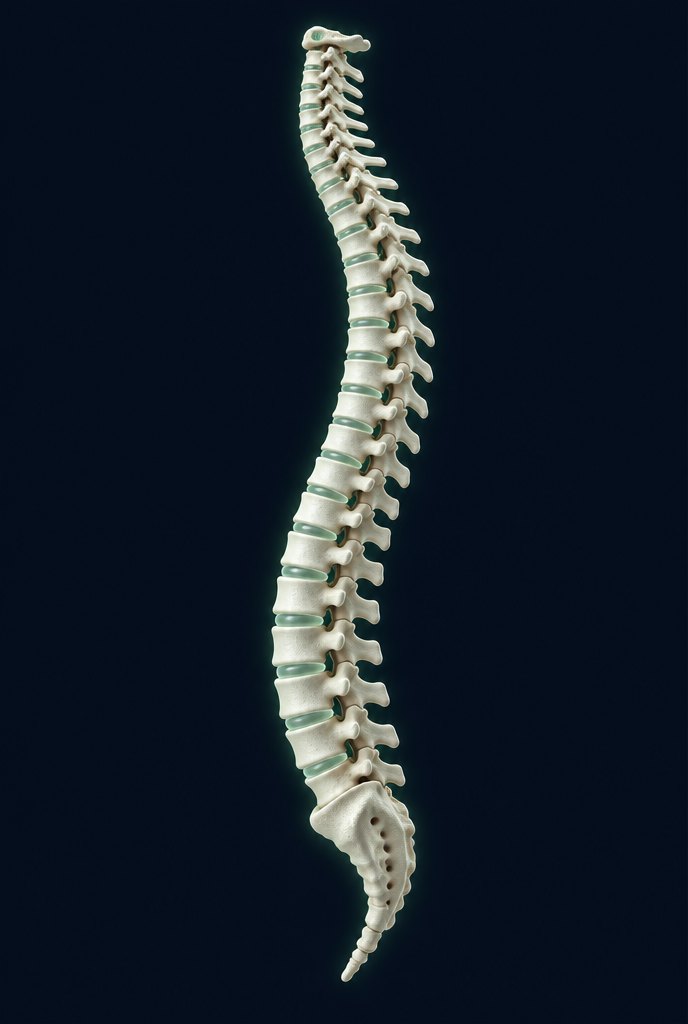
Spinal stenosis is a narrowing of the spaces inside the spine — the central canal that carries the spinal cord, or the smaller side openings (foramina) where each nerve root exits. When those spaces tighten, they crowd the nerves, and that pressure produces the pain, numbness, heaviness and weakness that bring people to our Coral Springs clinic, most often in the lower back and legs.
It usually develops slowly over years as the spine changes with age, which is why it is most common after 50 and why the symptoms creep up rather than arrive all at once. I have been helping patients in Coral Springs and Parkland manage it without surgery since 2005, and for most of them the first step is simply understanding the pattern.

Central vs. foraminal stenosis
The type decides how the symptoms behave. Central stenosis narrows the main canal, so it can affect both legs at once and produces the classic walking-related heaviness. Foraminal stenosis narrows the opening a single nerve root passes through, so it tends to cause symptoms along one specific nerve on one side — a pattern that can look a lot like sciatica from a disc.
Many people have both, at more than one level. Telling them apart matters because the exercises that open a central canal (bending forward) are not the same as the ones that open a foramen (gentle side-bending away from the painful side).
5 telltale symptoms of spinal stenosis
The signature of lumbar stenosis is neurogenic claudication: leg pain or heaviness that builds with standing and walking and eases when you sit or bend forward. The National Institute of Arthritis and Musculoskeletal and Skin Diseases lists it as the defining feature. These are the five we ask about:
- Leg pain, cramping or heaviness that starts after a certain walking distance — and shortens over time
- Relief within minutes of sitting, leaning forward or pushing a shopping cart (the ‘cart sign’)
- Numbness or tingling in the buttocks, legs or feet, often in both legs
- Gradual leg weakness or a feeling of unsteadiness on stairs
- Low back pain and stiffness that built slowly over months to years rather than after one event
Stenosis or a disc?
Disc pain is usually worse sitting and better standing. Stenosis is the opposite — worse standing and walking, better sitting. That one question sorts most cases before the exam even starts.
What causes the narrowing?
- Arthritis and bone spurs on the facet joints that grow into the canal and foramina
- Thickened ligaments (especially the ligamentum flavum) that buckle inward when you stand
- Bulging or herniated discs that take up space from the front — see bulging disc vs. herniated disc
- Disc degeneration that lowers disc height and shrinks the nerve openings — our degenerative disc disease guide explains how
- Old injuries, slipped vertebrae (spondylolisthesis) or a congenitally narrow canal in some people
Visit one is measurement: a conversation about walking distance and what relieves the leg symptoms, a hands-on structural exam, surface EMG and thermal scanning, and digital X-rays when indicated — which show disc height, spurs and any vertebral slip. Bring any MRI; we correlate it with how you actually move. Visit two is your full report of findings and plan, and Most patients have already begun care on visit one; this is where the full plan takes over.
Non-surgical options for spinal stenosis
Most people manage spinal stenosis without an operation. Our spinal stenosis treatment follows the 4R Method and is built around one principle: make more room for the nerves, then build the strength to keep that room.
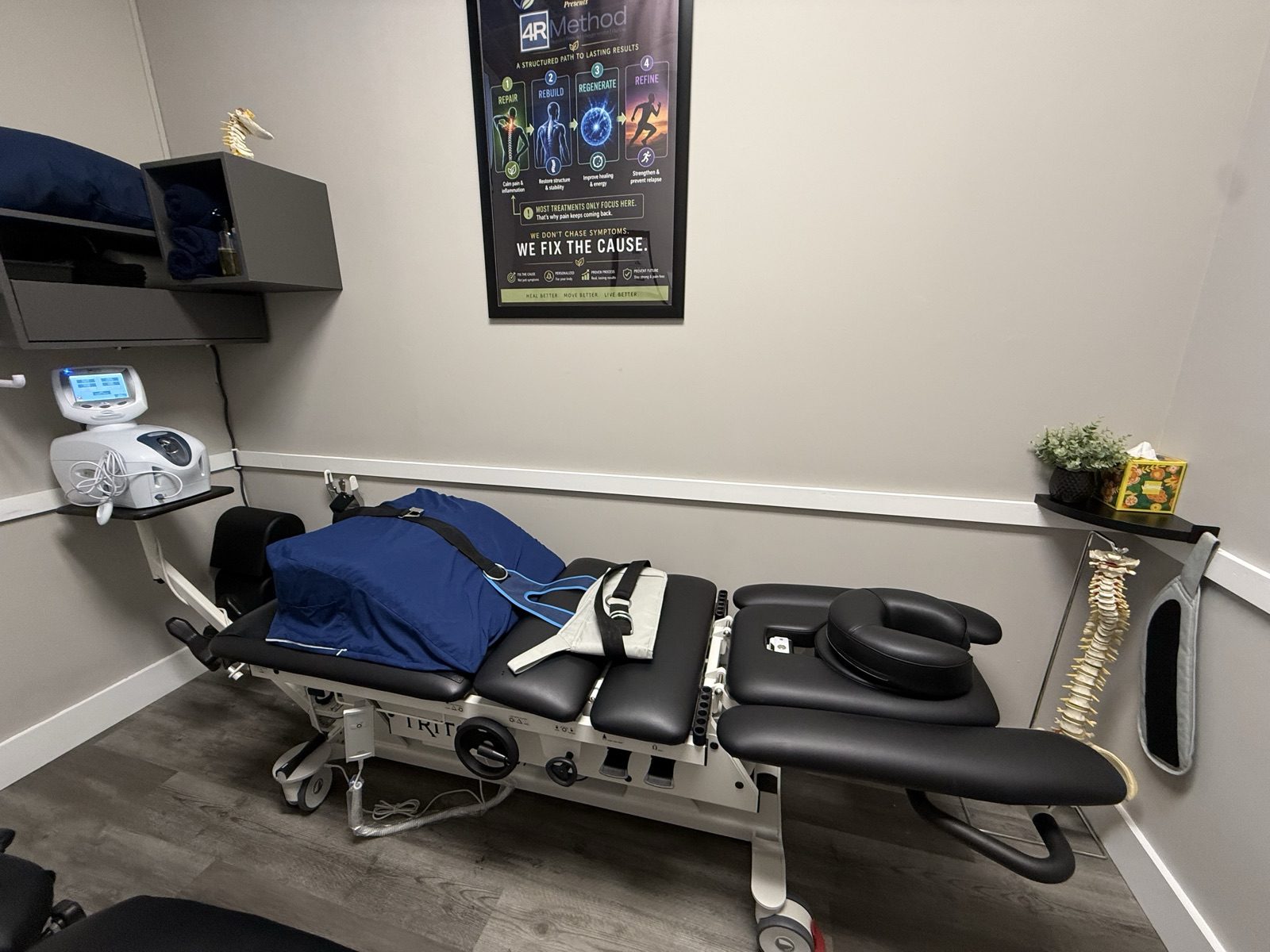
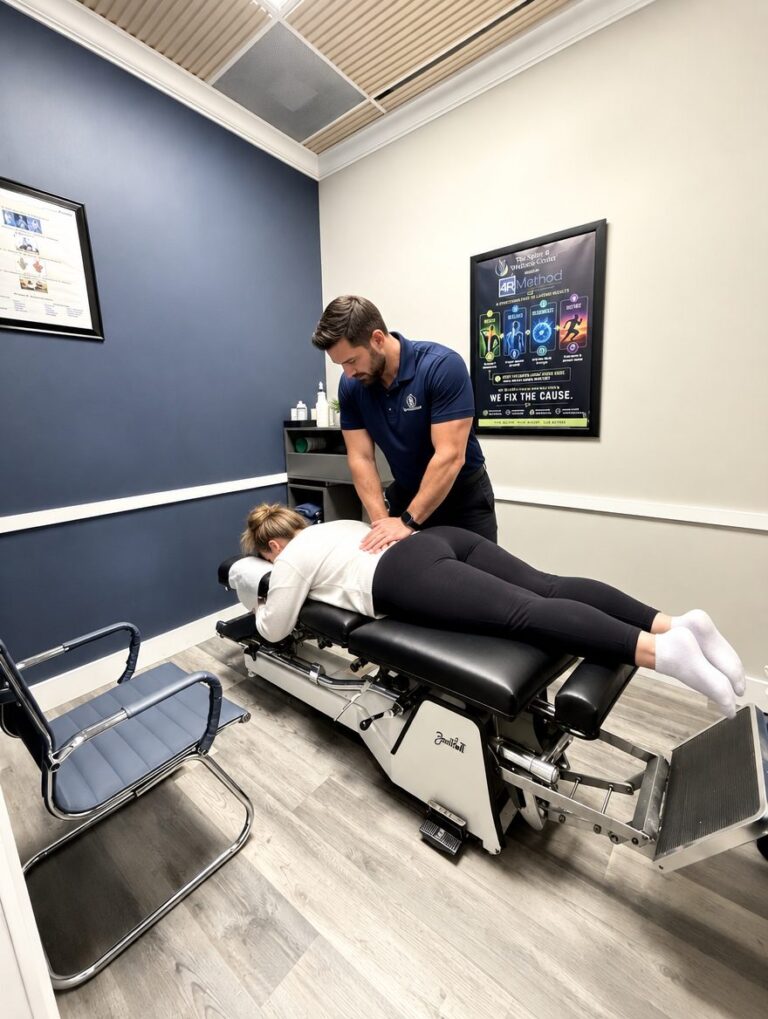
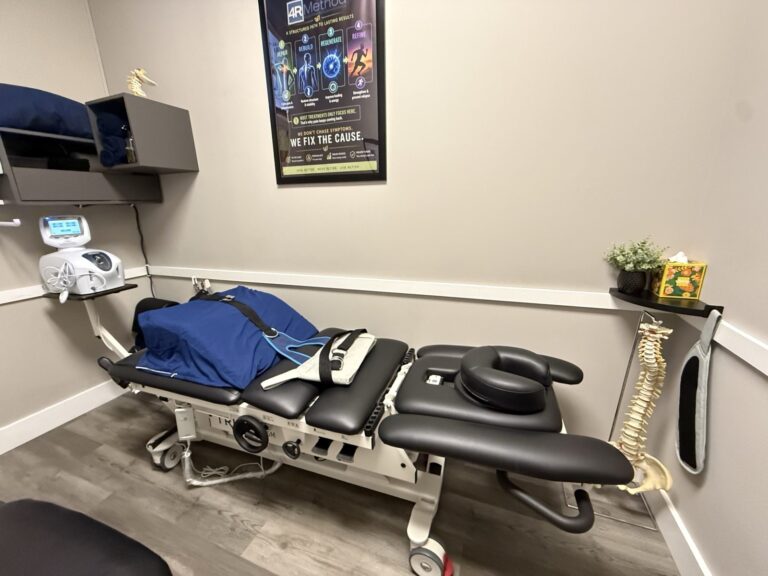
- Repair (3–5 visits a week, 4–8 weeks). Non-surgical spinal decompression on the Triton DTS table gently separates the vertebrae and opens the foramina for about 20 minutes per session — we program a slight flexion angle, which is the position that opens a narrowed canal. Gentle chiropractic adjustments (low-force techniques for arthritic joints) restore motion, and cold laser calms the irritated nerve roots.
- Rebuild (2–3 visits a week, 8–16 weeks). Flexion-based exercise — pelvic tilts, knee-to-chest, stationary cycling — plus deep core and hip strengthening so you can stand and walk with the canal held open by your own muscles.
- Regenerate and Refine. Red light and PEMF for the arthritic joints, then monthly tune-ups to protect walking distance over the long term.
When the narrowing is pinching one root and the leg pain dominates, our sciatica treatment page describes that version of the plan. How spinal decompression works explains why the table helps a canal that is narrowed by arthritis as well as a disc.
Daily strategies that extend your walking distance
- Use a stationary bike or an incline treadmill — leaning slightly forward keeps the canal open while you build fitness
- Plan sitting breaks on long walks and errands; a bench every few hundred yards beats pushing through
- Do your flexion stretches daily — knee-to-chest and pelvic tilts — and stop if pain radiates or worsens
- Keep weight in a healthy range to reduce the load on the arthritic joints
- Sleep on your side with knees bent, or on your back with a pillow under the knees
Surgery is reserved for people with significant, progressive weakness or who have not improved with a well-run conservative plan. For everyone else, non-surgical care is the right first step. If walking distance is shrinking, a spine assessment is the fastest way to confirm what is narrowing and what will open it. Please see a doctor or urgent care today for rapidly worsening weakness, numbness in the groin, or any change in bladder or bowel control.
Serving spinal stenosis patients across North Broward
Our clinic at 5675 Coral Ridge Drive, Coral Springs, FL 33076 serves Coral Springs, Parkland, Coconut Creek, Margate, Boca Raton, Tamarac, Pompano Beach and Deerfield Beach. Same-day appointments are usually available — call (954) 341-2256 or book online. Most patients from Parkland and Coral Springs are here in under 15 minutes.
Medically reviewed by Dr. Jared Cohen, DC — Co-Founder & Clinical Director, The Spine and Wellness Center. Last reviewed October 2026.
Frequently asked questions
Why does spinal stenosis pain improve when I sit down?
Sitting and leaning forward open the narrowed spaces in the lumbar spine, taking pressure off the crowded nerves within minutes. Standing and arching backward close them again. That position-dependent relief — the hallmark of neurogenic claudication — is the clearest clue that stenosis, rather than a disc, is the source.
Can spinal stenosis be treated without surgery?
For most people, yes. Decompression opens the nerve openings, low-force adjustments restore motion to arthritic joints, and flexion-based exercise with core strengthening lets you hold that space open while standing and walking. Surgery is generally considered only for progressive weakness or when conservative care has not helped.
Does spinal decompression help spinal stenosis?
It can. Gentle, cyclical traction on the Triton DTS table — programmed at a slight flexion angle — separates the vertebrae and enlarges the foramina for about 20 minutes, easing pressure on compressed roots. It is most effective combined with the exercises that teach your muscles to maintain that space.
How far should I expect to walk again?
That depends on how much narrowing there is and how long the nerves have been irritated, but extending walking distance is the main goal of care and the main thing we measure. Many patients see steady gains over the Rebuild phase as the core and hips learn to hold the canal open.
Same-day appointments
Reading about it is step one.
Step two is a measurement. Visit one we measure — and usually begin care; visit two you get your full findings and plan.
- Same-day appointments are usually available
- Our team calls you back to confirm your visit
- Coral Springs, serving Parkland & North Broward since 2005
Prefer to talk now? Call or text (954) 341-2256